5 things brands can learn from the Bieber debacle

Come on, you all knew this was coming.

It has not been a good few days for the global superstar. Where do we begin?

The #BieberBacklash (yes, that’s actually a hashtag) began when he had the ‘worst birthday‘ after being ejected from a London club for allegedly smuggling underage fans/guests through the door.

It’s a tough life, right? #BieberProblems.

Then, over the weekend, a seemingly innocuous tweet kicked off a fracas after Beiber RT’d a (SHOCK HORROR) a non-fan for saying she liked his new album.

The  Drum reports:

‘A succession of embittered fans jealous that their idol had deigned to retweet someone other than themselves who wasn’t a ‘real’ fan duly emerged with a series of hate filled tweets; including @julietesqueda who wrote: ‘Not really a fan of Justin Bieber but his acoustic album is really good!’’

Finally, last night, the Biebs was not one but two hours late arriving on stage on the opening night of his four day stint at the O2 . On a schoool night too? Never. Never say never. 

But OK, let’s look at this properly – what can brands learn from this?

1. Think before you Tweet
A few years ago, an agency head got into trouble after being somewhat unkind about the city where his main client was based. A silly error and, looking back through the mist of social media evolution, it seems like it’s a mistake of days gone by. But still, the lesson stands true: think before you tweet and never, ever tweet angry.

2. Reward existing fans, as well as new ones
Advocacy is everything. And, as innocent as it is to celebrate the acquisition of a new fan, treating all others in the same way will reap the benefits in the long term. In short: existing customers matter. Many service providers have got into the habit of offering their latest and best promotions (or at least deals of equal value) to both sets of customers. In future, Bieber might do too.

Sidenote: see also the death of ‘Our 2000th follower wins X!’ competitions. If you see this in action, call it out!  Why would anyone want to reward this brand new person when the 1999 have been supporting your growth along the way? It doesn’t make sense.

3. Know your audience
Whenever you kick off ANY kind of social media activity it is essential you understake a number of listening exercises to not only understand the current landscape of the market you’re working in but to also understand your audience. If Bieber had any insight – or had done any research – he would’ve known the following:

  • Monday night is a school night yo!
  • Travelling in (and out of) London late at night isn’t a fantastic experience (especially for young kids)
  • If he didn’t hear the boos from his dressing room then he certainly should/could have read about their disappointment online

4. Under-promise, over-deliver
Keeping your brand promises my seem like an easy and obvious one but it’s amazing how often many different brands forget this (at the expense of their fans and consumers). If you’re going to promise an AMAZING concert to all of your LOVING fans at a specific time, then you better make sure it happens.

And if you don’t – if you over-promise and under-deliver -well, then you really need to –

5. Invest in a Crisis Comms plan
Plan for the worst. Know what to do when things go wrong. At the time of writing, the Biebmeister is still yet to address the wealth of disappointed fans that had to leave the O2 early last night. A good crisis comms plan would know what to do in this situation: be that have the man(?) himself apologise on stage or even consider refund the ticket money – there are many different ways he could make this situation better. 12hrs later: none are yet to appear.

Irrespective of your opinion on Bieber-mania, there are a many, many unhappy fans sitting down at school today who feel let down by their beloved idol.

Read over the above again and just think: could it happen to you?


 Image via Adam Sundana on Flickr

Twitter and the monetization of the second screen

Twitter’s been buying again… 

Screen Shot 2013-02-04 at 22.32.36 (1)

According to sources, Twitter just bought US-based social TV analytics firm, Bluefin Labs. While the actual number is still an ‘undisclosed figure’, early reports state that this is Twitter’s ‘biggest acquisition to date’.

A few things:

1. This is REALLY interesting

Twitter and TV is clearly going to be HUGE. During the panel I was on at Social TV Conference London recently I remember saying something along the lines of -  ‘Let’s just be honest: second screen engagement is basically Twitter, we shouldn’t kid ourselves about that.’

I was being deliberately forthright but, looking back on it now, I don’t think I could’ve been any more right.

2. Is this is Twitter buying *outside* of their ‘API quadrant’?

Last summer, much was made about Twitter’s changes to their API. However what made it ultimately clear to everyone on what (and what was not) fair game was this one simple chart –

twitter-api-chart

At the time, Twitter made it very clear that they were encouraging developers to no longer create apps that existed in the upper-right quadrant. In fact, they went so far as to call out the guys they thought were doing a great job in the other areas – stand up Klout, Radian6, and Storify.

However, with this acquisition, Twitter are now parking their tanks on the lawns of many many TV analytics firms out there today, and who can blame them?

My point is: Twitter are moving the goal posts again. To wit:

‘You can develop on our API but as soon as there’s serious money to be made… we’ll have our ball back please.’

3. Monetizing the second screen is clearly the next big thing

This is hardly news but, after the massive success of Twitter at the Superbowl this past weekend (earning mentions in 50% of all advertising)… hang on, before we go any further, some fag packet analysis:

  • Superbowl ads cost (for airtime alone) $3.8m per 30seconds
  • $3,800,000 / 30secs = $126,666.66 per second
  • 26 of the (presumed) 52 ads featured during the Superbowl had hashtags appended to them
  • Let’s say, for argument’s sake, that those ads ran those hashtags for 2-3seconds (it’s probably more, so let’s shoot for the top end of that spectrum)
  • 3secs x 26 ads = 78seconds
  • 78 x $126,666.66 = $9,879,999.48

Which means that during Superbowl 2013, Twitter scored just shy of 9.9million dollars of FREE ADVERTISING.

Wow.

Sorry, where was I?

Oh yes, brands are on the Twitter train (for second screen activity) and the great ones are killing it. How long will it be until others catch on? 5, 4, 3…

4. Bluefin now, Second Sync next? 

From what I can tell, Bluefin are US only. Which is great, and an obvious win for that team (second screening in the US is clearly the most advanced / widely accepted). However the immediate question is: what’s next for the rest of the world’s TV social analytics market?

The smart money would be on the UK’s Second Sync being next. At a recent London Twitter event, #PoweredByTweets, Second Sync data was present in nearly every presentation – and Twitter were happy to say so too. They clearly do the best job, they’ve clearly been anointed as the chosen ones in this particular region, so are they clearly next in line for aquisition? Place your bets now please…

5. Social TV + The Future

It now goes without saying that 2013 really will be the year of Social TV. There’ll be a lot of snake oil salesmen out there and separating the wheat from the chaff will certainly make for interesting viewing indeed.

Bring it on, creatives of 2013, let’s see what you’ve got.


Five things on Friday #48

Things of note for the week ending November 30th, 2012

[click to embiggen]

1. Pacific Rim
I first blogged about Pacific Rim back in July (when it was merely a launch poster at Comic Con), and this past week a blueprint for one the giant robots – or ‘Jaegers‘ – that feature in the film has turned up as well as the first part of the teaser campaign, below –

A few things –

  • I love Guillermo Del Toro and I’m quite close to believing that he’s never made a bad film.
  • The tech blueprint is a MUCH BETTER example on how to do tech blueprints (back of the class please Prometheus).
  • I’m well up for this film, 3D-post-conversion and everything.

2.  Deadmau5 + Nokia
The Lumia 920 launched in the UK this week and, to celebrate, Nokia threw a(nother) Deadmau5 gig somewhere in the south of London.

Deadmau5

It was a bit nippy, but overall we had a good night. I grabbed an awesome video and a decent collection of photos too. Check it.

I’m using a Nokia Lumia 920 myself at the moment and, if you’re interested, initial thoughts are up over on The Voicemail

3. Is Twitter ruining the celebrity endorsement?
This article, from The Verge, dissects the current trend of celebrity / technology placement and is fantastic food for thought, in more ways than one.

“As sales of physical recordings continue to decline, it no longer makes sense to spend six figures on a video that might not pay. That doesn’t change the production cost of a video, however, so product placement is increasingly used to fill the gap. Nokia has been particularly active in this space, with Lumias popping up in videos for Flo Rida, M83, Ke$ha and Katy Perry. Often, the deals are limited to the budget of the video itself, which can leave the performer unsure of his or her obligations once production is done. Was Flo Rida just playing a character who loved his Lumia phone, or was the “Whistle” video really a window into his life? Either way, it’s hard not to feel like someone’s pulling a fast one. Finding him tweeting from an iPhone would be like catching Bad-era Michael Jackson drinking a Coke. We can overlook a low-level sellout, but switching sides is just bad form.”

That last sentence kind of nails it for me. ‘Bad-era Michael Jackson’ wouldnever have been caught drinking a Coke because Bad-era Michael Jackson was around in the disco/pop, cash-rich, yuppy/money-can-buy-me-anything world of the 80s. NOT the new media/capture-and-share-anything-and-everything world of the post-noughties social media generation.

Basically, what I’m saying is, there’s nothing wrong with these placement deals – of course there isn’t. It’s just another form of marketing and advertising and, believe it or not, it does actually work. However, what’s required is a more in-depth contractual commitment that lives past the 4min music video. An arrangement that not only guarantees that you hold device X for one shot, but also defines that you throw device Y in the bin as you do.

The answer to the question is: NO, Twitter isn’t ruining celebrity endorsement. Poorly thought-through modern-day endorsement contracts are ruining celebrity endorsements; Twitter is just pointing out the holes.

When it comes to placement, brands need to think harder, and work smarter.

The end.

Sidenote: I love you Mike.

4. This Cheetah is Beautiful

Play it fullscreen, in HD.

You won’t regret it.

4. Live from New York
This gorgeous anecdote, via Bill Murray, over on HuffPo made me add ‘Live From New York‘ to my Amazon wishlist (hey, feel free to buy it for me won’tcha?) – and I’m fairly sure it’ll have the same affect on you too.

5. Laker Bros

For no reason whatsoever.

Like Deadspin, I just can’t stop looking…

————————

Before I dive into this week’s bonuses, a moment to pause –

This week I realised that this post marks the 48th part of a 52 week promise I made myself at the start of the year. A blogging challenge if you will, to reflect on the week that was and – at the end of the year – have a single blog post for every week that would show what I’ve achieved and/or done with my time on this earth.

I won’t lie. This year has been tough. For both me, and my partner. As we head into December reflecting on 2012, the year of awesome, is hard. Professionally I’ve had ups and downs, winning my first major pitch for Ogilvy was a definite highlight, but the low-points – in general – include more character assassination attempts than I’d care to shake a stick at (from friends, (ex)colleagues/girlfriends and enemies alike), as well as dealing with a few health issues affecting the one I love…

Somewhere along the line the Five things on Friday changed. Changed from things I found awesome and wrote in my Moleskine, to things I’ve found on the internet and thought you should read. I don’t know how I feel about this change. I don’t even know if I want to continue with the weekly thing [once the 52nd week comes to an end].

I guess my question is, to you dear reader, what do you think? This project was going to be a one year only deal, things have been mad – hectic even – is it worth carrying on into next year and beyond?

Let me know…

————————

Bonuses this week; Mark Ritson on John McAfee is an incredible read; if you’re a Mac user and need to brush up on your Lord of the Rings knowledge, it’s OK there’s an Easter Egg just for you; and finally, and rather unsurprisingly, China has a food problem.


Whatley out.


Five things on Friday #35

Things of note for the week ending August 31st, 2012

1. Dub the Dew
This isn’t that new but I just found another write up on it and well, I realised I just had to share. Mountain Dew decided that they’d ask the internet to help them name their latest apple-flavoured beverage.

The internet, responded.

This was – I KID YOU NOT – the Top 10 right before, some 48hrs after launch, PepsiCo [unsurprisingly] took it down –

  1. Hitler Did Nothing Wrong
  2. Gushing Granny
  3. Fapple
  4. Gushin’ Granny
  5. Diabeetus
  6. Grannies Squirt
  7. Gushing Grannies
  8. Gooshing Granny
  9. Fapulous Apple
  10. Gushing Green Granny

Brilliant.

You could blame the internet. Or you could blame 4Chan. Really, you should blame a naively conceived competition by a brand that should’ve known better.

2. Verified Twitter Accounts
Ever wondered how they work? Lance Ulanoff just had his Twitter account verified and was kind enough to blog the entire process. I thought it was interesting.

3. THIS. IS. EPIC.

4. Las Vegas Lulz
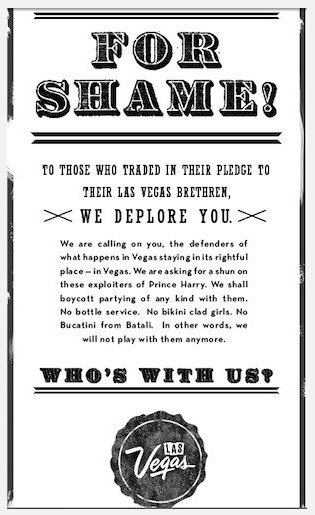
So that thing happened with Price Harry the other week? Yeeaaah, aside from a few red faces inside the palace, it turns out the Las Vegas Convention and Visitors Authority were none too pleased either.

A fairly decent tongue-in-cheek full page ad in USA Today appeared earlier this week –

Love it.

5. The Darkness, covering Radiohead

There are no words.
via

Bonuses this week: this Designing BBC iPlayer for Xbox 360 article from the Beeb is a damn good read; Episode 013 of The Voicemail Podcast is out now and is full of the usual mobile-related banter (but with IFA/Samsung/Sony extras); and this Leo Burnett vs Asylum Films debate is worth ten minutes of your brain [UPDATE: now with illustrative background from LB’s CEO]. 

‘Til next time…


Five things on Friday #31

Things of note for the week ending August 3rd, 2012

1. The London Underdogs
“The most important thing in the Olympic Games is not winning but taking part; the essential thing in life is not conquering but fighting well” 
– Pierre de Coubertin. Father of the Modern Olympic Games, speaking at the London 1908 Closing Ceremony.

And it is with that gorgeous quote that the spirit of The London Underdogs is built upon. Yeah, that’s right – let’s hear it for the Olympic Underdogs!

Here we are, at the mid-point of the two week extravaganza, and if you’re still yet to go (but have tickets to spend next week), get your posters from The London Underdogs.

Seriously, they’re awesome –

The London Underdogs

The London Underdogs

As the website says:

“We Brits love a good Underdog. The wild cards. The fighters. Those have-a-go heroes who haven’t a hope. We’ve never heard of them, we don’t know what they look like, and their fans are few and far between. But we cheer them all the same.

So join us, and together, we can show the world that it’s definitely about the taking part.”

Well done my friends, very well done indeed.

—–

2. Cellophane Art: WIN

I absolutely love this artwork and have no idea why something like this has never been done before. ‘Cellograff‘, as its referred to by its creators, is French in origin, but universal in its appeal. I love it. I think you might too.

3. Blackpool’s Dune Grass
What is it? Have you seen it? Never heard of it? Watch this…

Blackpool’s latest addition to their pleasure beach takes the shape of these rather quite enchanting blades of ‘dune grass’. Conceived and created by the geniuses at Freestate, these kinetic sculptures have been in the works for several years and it’s actually quite lovely to see them at last, living and breathing in the real world – where they belong.

Super regular readers may recognise them from an earlier video… say, back in 2009?

I’m saying nothing.

—-

4. Age-verified Following on Twitter
Earlier this week (or maybe the week before, I don’t remember), I was followed by the beer brand, Tsing Tao – Huzzah!

I quite like Tsing Tao and drink it fairly regularly, so a follow back was in order… but then, when I did, I got an auto direct message response.

Sidenote: auto direct messages suck. They’re spammy, impersonal and generally a one way ticket to an auto unfollow.

But this one was different, this one wasn’t asking me to subscribe to someone’s blog or to check out something else this new follower had done, no – this one asked me to confirm my age.

– I have not seen that before.

While this could be seen as merely a hoop-jumping exercise that alcohol brands go through to meet certain regulatory requirements (there’s no credit card details or anything that actually verifies a thing; I could be 17 and lie about my age), it does please me to know that these rules are actually being adhered to.

I’m not sure how long Twitter has made this feature available to brands, but I really like that it’s out there and I really like that Tsing Tao is doing things properly.

A cricket clap for for all of you.

5. (Fake) Injuries up your social status
This is old but apparently, back in 2009, it was fashionable in Beirut to sport your very own nose-job bandage. This trend was born out of the rise of the nose job in Lebanon and, given their expense, pretending to have had one implies that you have $1,000 to throw around on plastic surgery. Incredible.

Bonuses this week: as it’s that time of year, then it’s worth re-watching Monty Python’s Silly Olympics; More Olympics-based chatter from Herdmeister but this time focusing on what the event actually reveals about us, as human beings; and this map of the internet is awesome too.


Whatley out.

Nike, Twitter, and the ASA: new rules are required

A fifteen minute lunchtime download

Guardian Headline

It happened.

If you missed this in the press, Nike had their Twitter campaign banned because they were found to be in breach of the ASA’s online remit around transparency.

The ASA said –

“We considered that the Nike reference was not prominent and could be missed. We considered there was nothing obvious in the tweets to indicate they were Nike marketing communications.

In the absence of such an indication, for example #ad, we considered the tweets were not obviously identifiable as Nike marketing communications and therefore concluded they breached the [advertising] code. The ads must no longer appear. We told Nike to ensure that its advertising was obviously identifiable as such”.

You can read the full and thorough article over on The Guardian, however (and if you’ve already done that), for me, this finding throws up a whole other set of questions that I first started pondering nearly a year ago.

In this IAB post ‘Rules Rules Rules‘, from August 2011, five months after the ASA remit extension – I made the following argument:

————–

“If we … think about the combined worlds of brand, celebrity and sport personality, for example – how do these new standards play out?

Case in point: Tiger Woods and Nike.

When we see Mr Woods teeing up at the PGA Tour, do we question that the Nike cap he chooses to wear is there for any other reason than advertising? No. Of course not. It’s an expectation. Something that we, as the viewing public, have grown to accept within this particular industry. It’s a given that this happens. However, it’s also assumed that – given his high profile nature – that this sponsorship must have happened. Why else would he be wearing the logo? And of course, there is no doubt that Nike put out a press release when this sponsorship was made – but how long ago was that? Tapping the word ‘ad’ on the tail of everything [paid for] that we publish is kind of silly really.”

————–

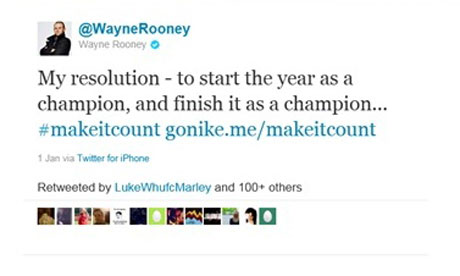
Swap Tiger Woods for Wayne Rooney and we’re pretty much in line with what has happened here.

While I, as a social media practitioner and professional, wholly endorse legislation to correctly monitor and police this nascent marketing channel, I find it hard to not at least side slightly with Nike with their defence of:

‘…both players were well-known for being sponsored by the retailer which argued that Twitter “followers” would not be misled about the relationship it had with the players.’

The ASA’s sticking point?

‘It was understood from its investigation that the final content of the tweets was “agreed with the help of a member of the Nike marketing team“.’

It’s important to acknowledge this key point: Nike had a say in what was written by their sponsored sportsman. If they didn’t, then it wouldn’t be an issue, (right?).

Placing that aside

Everything that’s been written about social media has defined how different it is from the rest of the media types that have come before it; it changes the game.

The Snickers case [item 5], was found to be not in breach of the new remit. Nike, was. To say this is still very much a grey area would be an understatement and, as a result, the industry needs smarter, more fluid, regulations accordingly.

While HONESTY will always be your best marketing tool (thank you, Nicole), when one side thinks it was being true and the other thinks it wasn’t, an adult conversation needs to be had about consumer-wide understanding and acceptance of what sponsorship means.

And moreover, just how exactly celebrity sponsorship works together with social media.


What is Dabr?

Dabr is probably the best mobile web interface for Twitter available today. Described as ‘m.twitter on steroids’ by its users, Dabr is a labour of love by three chaps from England.

It started back in 2008 when David Carrington, mobile developer hobbyist extraordinaire left this comment on the then SMSTextNews website, Mobile Industry Review. I replied and then we took it offline.  From there, ideas started firing back and forth right up until the end of the year.

Three months later, in January 2009, I signed on as official strategic advisor and since then, we’ve grown the service massively. As of August 2011, the open source code has been downloaded 27,000 times and, even as far back as 2010, our user numbers and stats have been fairly impressive (which reminds me, I have an update from 2011 to put up on the blog).

Originally built for alpha-numeric keypad devices, such as the Nokia N95, Dabr now caters for screens big and small, with touchscreens and without, sometimes even stretching to devices that aren’t even phones!

Supakitsune - Dabr

Being open source means that guests can add their own code to the story and Terence Eden‘s contributions were so damn good that David asked him to become the third member of our team. It’s only a part-time project (we all have day jobs) so the more help we can get, the better. Terence’s contributions have been fantastic. In fact the last overhaul (when we switched servers) included a whole host of features that were mainly based on his awesome developments and iterations.

Thanks to our successes on the user number front, we had to introduce adverts to help pay for new (and better) servers. Fortunately, the users that we’ve done this for have been both supportive and loyal throughout this time and our numbers have stayed steady. Ads are in, the users are happy and the service still lives on.

Next time you’re on Twitter, have a look for the tell-tale sign of ‘via Dabr’ at the end of someone’s tweet, that means they’re using one of the best free web-based Twitter apps available today.

Give it a go, you might like it –

Related links:

Dabr
The Dabr Blog
Dabr on Twitter

The Code

Terence Eden’s Dabr Posts


In the press:

Channel 4 News [link broken] but references can found on the Dabr Blog and Mobile Industry Review
One Forty Review Page
(4.5 out 5)
Mr Phillip Schofield is a fan and user
Service of the Week‘ by mjelly
UberMedia using Dabr’s code c/o The Next Web
First Second Twitter app to integrate Twitter lists


Also published as a page for future reference —


Some thoughts on #DriveTime

This post is about the recent home release social media activation of the film DRIVE. There maybe spoilers ahead BUT I’ll be sure to yell loudly if they come near. Then again, we may make it without any. We shall see…

Drive: a stunning, nay breathtaking, film from 2011 (some would argue THE film of 2011). Woefully ignored by the Academy but adored by fans worldwide, its a glorious tale of love-driven revenge told through the haze of 70’s LA neon with a soundtrack to match.

Of Drive, I am a fan.

On Monday, Jan 30th 2012, Drive got its UK home release on both DVD and Blu-ray and, to celebrate said launch, film-studio-friendly agency, Think Jam, sent out early copies of the film out to a select group of fans on Twitter.

The aim? To kick-start a pre-scheduled participatory/group viewing, snappily referred to as #DriveTime.

Nice idea.

But not everyone agreed –

Dan has a point.

In fact, the whole conversation between him and Mike is worth a look (especially as both have proven experience in this kind of marketing). I stumbled across the conversation between the two of them after the film had finished, however found myself unknowingly agreeing with them midway through.

That aside, there’s also the very real issue of SPOILERS.

I would be gutted if someone I followed [on Twitter] unwittingly gave away key plot points throughout any film that I was yet to see (especially on THE DAY of its home release, ie; if you didn’t see it at the cinema then you’re stuffed). In fact, so much did it concern me that I issued my own warning before the film started.

Those issues aside, the ‘event’ seemed to go well. So well in fact, that my friend and I started kicking around some ideas around data visualisation that could work alongside it – yes, that’s right, we’re data geeks.

Bear with me, this is where things get interesting –

Data Visualisation around group events is nothing new, see The New York Times and the Super Bowl or before that, The Guardian and the World Cup; with swathes of data, you can make beautiful, beautiful visualisations.

But these events, they’re huge, global happenings with hundreds of thousands of tweets to process, giving you an extremely granular level of preciseness that you wouldn’t find with say, 1200 or so tweets… right?

Well, ish.

“…I bet they haven’t sold it in.”

One of the great things about these kinds of social media campaigns is that the data is (relatively) free and available for anyone to access. So what if you could steal the data from the Drive activity and not only present it back in a gorgeous fashion, but also demonstrate your skill as a potential new partner in doing so?

“Could you piggy-back another agency’s paid activity to showcase your own?”

Well, as I said, the data is there. So all you would need to do is farm that information and go from there… right?

Search term: “#DRIVETIME” – parameters 30-31 Jan 2012 – network: ‘TWITTER’

Export as .csv, group & subtotal the number of tweets by time published and… Voilà!

Look at that lovely data.

I’ve cleaned it up somewhat (only showing the data between 7pm and 10pm – the film started at 8pm) but you can clearly see the flurry of activity that happened throughout.

Now, we can sexify this chart (thanks Robbie) and we can also actually map the highlights of the film against the peaks and troughs of conversation.

A – 8pm: the film starts
B – End of [the awesome] opening sequence, ‘Night Call‘ kicks in
C – The Driver meets the girl for the first time – it’s encapsulating
D – Combination of ‘Under your Spell‘ starting + a key killer quote from our hero
E – Sequence of Driver and Irene spending time together [intense]
F – That elevator scene
G – Dip for a(nother) particularly violent piece
H – Film ends, people loved it and tweet according

.  Incredible.

What are the takeaways from this exercise?

  1. If you’re planning a scheduled viewing (over social media) make it both a) a universally accepted film (read: a classic that most people have seen) and b) perhaps one that’s not so visually sumptuous and arresting.
    .
  2. Think about THE DATA. Alright there was a Storify after the fact, but if me and my friends can throw together a crude visualisation of what our collective tweets look like… then Christ, what else is possible?

Which in turn asks a bigger question:

If today’s brands (and consumers) are ready to remix anything and everything, what’s to stop the agencies of tomorrow doing the same?

..oh and look, no spoilers.

1000heads: 3CT #3

In keeping with our series of posts, here are the three coolest things we presented at #3CT recently –
[post history]

First up, our resident Kiwi and HR person, Lucy Armstrong, wanted to share this awesome piece of Rugby World Cup inspired Lego-based wonderment –

When we asked ‘Why is this cool?’ to the rest of the office, the simple answer was ‘BECAUSE IT IS LEGO!’
However, one thing that did come out of this was the amount of time and effort that goes into some of these cool things. The above stop-motion video leads quite nicely into another high-effort delivery, aka: cool thing number two

Regular readers will know that we like our big Follow Fridays here at 1000heads and last Friday was no exception. The Nokia community team were in the office helping to create the above #FF message out of post-it notes. @My_E72 was over the moon with our message and well, we thought it was pretty damn cool too.

Our third and final cool thing came from one Joel Diamond. Joel had managed to locate what is being labelled as an ‘Audio-Haptic Navigation Environment.’

Not sure what we mean? Take a look –

http://vimeo.com/moogaloop.swf?clip_id=28447850&server=vimeo.com&show_title=1&show_byline=0&show_portrait=0&color=00adef&fullscreen=1&autoplay=0&loop=0

Using a specially-designed glove, alongside a slightly tweaked version of the Xbox Kinect sensor, the SOPI research group created the above experiment.

I wonder how long it’ll be until we see gigs performed in this way?

Let’s start bets at three months…

The Social Media Rollercoaster

Round we go...Summer is coming and – between the torrential downpours – the sun will be shining once again.

Last weekend, while queueing up* for Adventure Island‘s RAGE rollercoaster on Southend Seafront, I began wondering how theme parks could use social media and further engender positive word of mouth.

And, it was after reading Joe’s post earlier this week around the Social Season Ticket, did I then decide to put my thoughts down on paper – so to speak.

To my mind, theme parks and attractions have a fantastic opportunity when it comes to social media. Standing in line amongst the other would-be screamers, my brain started buzzing. So much so, I made notes –

‘Wouldn’t it be cool if each main attraction at a major theme park had its own Twitter account broadcasting not only for ‘on brand’ messaging [ie: ‘Boo!’ for the haunted house] but also – and much more importantly – up to date queue time information. As a guide for the more socially-savvy guest, this service could prove invaluable.’

This is not an untouched area in this industry. Back in February, Alton Towers announced they were a launch partner for Facebook Deals here in the UK. According to their site:

“On Friday 18th February 2011, the Alton Towers Theme Park opened a day earlier than planned for the Half Term holiday, offering exclusive use for anyone who checked in with Facebook Deals on that day. Guests were able to enter the Theme Park with up to three friends, completely free. 100 lucky people will also claimed a hotel stay on the night of 18 February 2011, completely free!”

Very swish.

As with any industry, it really does depend on how much time and money theme parks want to invest in making this a success; is it a case of a simple Facebook promotion [Like ‘Thorpe Park’ on Facebook and get 10% off your ticket entry] or do you want to go the whole hog and have Facebook, Twitter and Foursquare integrated across every branded touch point [including your entrance ticket].

My advice?

As ever, choose an objective and stick to it

  • Want to increase footfall?
    Great, run an online ticket promotion
  • Want to sell more gifts + toys?
    Offer Foursquare deals at specific stores across the park
  • Want to help control traffic around the park?
    Introduce ride-only Twitter accounts which tweet when the queues reach over an hour

One last idea from me –

Why don’t theme park ride photographs post straight to Facebook?

This is such an obvious and quick win. Photos get uploaded to Facebook, guests like the page and then are able to tag themselves post-visit. Ultimately, sharing branded experiences with their Facebook friends using branded photos.

It’s certainly better than forking out £8.00 for an old school photograph that you’ll probably get crumpled up on the way home…

All of that aside; as an avid theme park fan myself, if Twitter was used as an information service for each ride? I’d be there like a shot.


*Yes. This is how my brain works even on my day off