How do you solve a problem like building gaming communities on Twitter? (aka ‘X’)

Ten years ago I was part of the research team that uncovered the slow death of organic reach for brand pages on Facebook.

Led by Marshall Manson and using data from over 100 agency managed brand pages, totalling more than 48 million fans, the Social@Ogilvy team were able to ascertain that organic reach for Facebook was facing a precipitous decline.
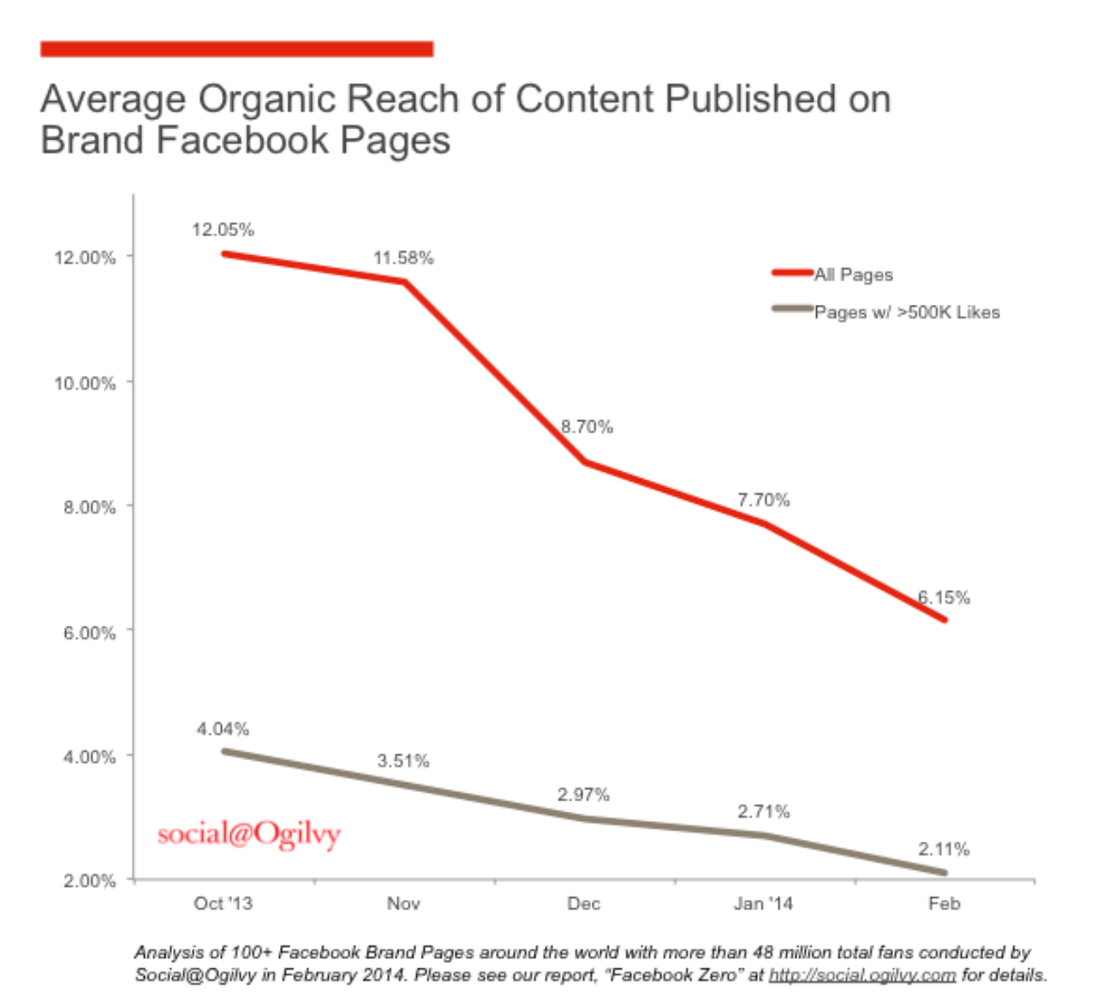

From October 2013 – February 2014, we could demonstrably prove that organic reach had dropped from 12% to 6%. That means for fan pages with 100 fans, any post with no paid media behind it would only reach six people.

In short: the free ride for brand fan pages was over. And the age of paid social had begun. Other social platforms soon followed. And in the years that followed, algorithmic content serving became king.

Since then, it became my standard to advise clients as often as possible to steer clear of an organic only approach to social media. To instead diversify your platform investment. To find new ways of not only building community, but doing so on a platform where you have ownership of – or at least reasonable access to the data. Valuable data that you can use for analysis, segmentation, retargeting and beyond.

Above all else, we eschewed the outdated KPIs of follower counts and fan chasing and instead focused on sharp paid media targeting and kick-ass creative.

In short: vanity metrics ain’t it.

If the lesson to stop building a fan following on one social platform wasn’t clear enough by now, you only need to look at the trash-fire that is the far-right, transphobic, sex-trafficker-supporting social platform formerly known as Twitter, X.

Earlier this year you could still see games publishers putting paid media spend behind asking X/Twitter users to ‘Follow this account for the latest updates’ about a new game.

Eg:


This is nuts.

According to the most recent research, the average half-life of a tweet is 24 minutes. Combine that with X/Twitter now purposefully obfuscating the organic reach metric (instead going with the non-unique nebulous number of ‘impressions’ – all views count, not just uniques), chasing vanity metrics is, at best, a dated KPI from the late noughties and at worst – a complete waste of time. Putting paid media behind that chase, even more so.

This alone should be cause for concern. When put against the recent shift of X/Twitter’s ownership, politics, and frankly, complete rejection of any and all brand safety – putting any spend into X/Twitter at all is… ill-advised.

OK so what’s the solution?

You might be reading this and thinking ‘Well, that’s not my experience’ – and you might be right. You might be experiencing a fantastic community on the platform and everything is amazing.

I doubt it, but you might.

You might also be reading this and screaming ‘James, Discord solves this!’- well, that is and isn’t the answer – the answer is and should always be ‘it depends’.

It depends what it is you’re trying to do. It depends on where you are in your game lifecycle. It depends on how much time/money you’re able to invest.

Learning how to diversify, test, learn and then commit. That’s the real trick.

But let’s get into it.

From AAA publisher to bedroom indie, the first question should always be: What is your objective? What is the one thing you’re actually trying to do?

‘I want brand awareness, community engagement, and sales’ – is not a single-minded objective. It’s three. The serious marketer chooses one.

‘I want to get 5000 followers on Instagram’ is not an objective. It’s a measurement. A measurement of what objective is the question.

‘I want an engaged community that I can reach with news and updates about my game’ – then the answer might be building Discord (for the core) or in fact, email (for mass).

Discord does of course have its pros. And many if not all of you reading this will be familiar with the platform. It is undeniable how useful it can be for developing that early/golden cohort of interest. However, you need to use it properly to drive engagement and interest. Talk to your fans, post regular / exclusive content. Engage in conversation. In Discord you have a captive audience, an audience that you can guarantee reach – so use it wisely. Don’t just auto-post your X/Twitter content. It’s lazy, disrespectful to the community and ultimately won’t deliver against your objective. You know who you are.

What about email?

We are without doubt in the age of the newsletter, whether you use Substack, Mailchimp or Ghost, newsletters are a great way to speak directly to people that actually want to hear from you. You get to own the first party database (hello, email!) and you get to sidestep the algorithmic content serving lords and masters of the social platforms. If email isn’t in your marketing channel plan, why not?

What else can we look at?

Well once again it comes down to your objective. If you’re building awareness, then for a small amount of investment you can do a surprising amount. From reaching new fans, building memory structures for existing, or even just giving announce trailers a paid media bump can be relatively simple and surprisingly cost effective.

If you need to drive interest on pre-orders, then ‘buy now’ carousels or stories/reels might do the job – and with the right creative execution then this too can deliver the results you’re after. All it takes is a clear brief and a commitment to a single objective.

There’s a lot here that should not come as a surprise.
It’s not rocket science.

The point is: when it comes to games marketing, the platform landscape is in flux. Single platform organic engagement can no longer be relied upon for reach and follower/fan vanity metrics are as out of date as the opinions you can find on the platforms you’re squandering effort in.

Endlessly chasing the same core set of gamers to like or follow the same accounts for single digit amounts of organic reach or worse – impressions – is a colossal waste of time and money. Blending a cross-platform organic approach with paid media, underpinned with an owned data driven platform (hello email), all in service to a clear single-minded objective is the route to genuine growth.

So how do you solve a problem like building communities on X/Twitter? Well the answer is simple: this problem was solved years ago, I’m just wondering when everyone else will catch on.

Note: this is an updated cross-post from an original Linkedin entry (where the comments are interesting and worth a look also).

Five things on Friday #82

Things of note for the week ending July 25th, 2014.

Things of note for the week ending July 25th, 2014.

WEEEEEEEEEEEE

— Above image via this AMAZING photo set 

1. Shatner on Facebook Mentions
If you’re a celebrity (hi!) then you’re probably interested in this new app from Facebook, ‘Facebook Mentions‘. If you’re not a celebrity, don’t worry because William Shatner (yes, that one) has written a handy guide.

Facebook Mentions - shatner

You can read said guide over on the former Captain Kirk’s super awesome Tumblr page.

2. Destiny
If you’ve been paying attention recently, you might’ve spotted that there’s a beta of a new game out at the moment and its name is Destiny.

DESTINY

Seriously, download it now.

To celebrate this game being amazing, here are some key facts about Destiny:

  • Activision, the game’s publisher, is apparently investing around $500 million on the development and marketing of this game (that’s an insane amount of money ).
  • Bungie, the game’s creator, is the team that developed the multi-award-winning Halo series for Microsoft’s Xbox.
  • The game itself doesn’t actually hit the shelves until September 9th. All of the press so far has been about the limited time Alpha (one weekend!) and the Beta (two weeks!). See the official timeline for details.
  • Oh, and it is awesome. SO AWESOME. Order it now.

3. A guy walks into a bar
This is wonderful.

4. Moto X Tattoos
This is now a joke: Motorola have launched a new range of temporary DIGITAL TATTOOS that you can stick to your skin and then use to UNLOCK YOUR PHONE.

Wooo fancy

There’s a fancy video too (it’s only 90 seconds long – give it a watch).

Personally, I think this is awesome. Like, really really awesome. Admittedly the ‘tattoos’ themselves only last for a week (and I think about ten dollars for a pack of ten) BUT it’s a yet another item to add into the wearable tech of the future category that hopefully we might see more of over the coming years.

Hurrah for innovative thinking.

5. The best Philippines fact you’ll read today

Vulcan Point

Did you know that Vulcan Point (the small island pictured above) is the world’s largest island within a lake on an island within a lake on an island? Well, you do now.

Nature is awesome.

— — —
I’m off Twitter for a little while (long story, check my feed for clues as to why) so if you’re reading this, please share it as far and wide as you can.

Cheers,

Whatley out.

rain


Five things on Friday #78

Things of note for the week ending June 27th, 2014.
(sorry it’s late)

LOOK AT THE THINGS

1. Paper Later
Discovered via my friend Robbie last night (who had just taken delivery of his own copy). PaperLater is a super neat and super retro way of enjoying the articles that you save to your ‘read it later’ app of choice, e.g.: Pocket or Instapaper).

Paper Later

What it does is, for £4.99, pull all your saved-for-later articles, lays them out in a decent format, print them up on sustainable / recycled newspaper, and then delivers the whole thing to your door.

Lovely stuff.

The beta is UK only for now and you can sign up right here.

2. Petit Tube
Like Forgotify before it, Petit Tube is a website that celebrates the esoteric content of the internet. In this case, bringing out the very best (or worst) of YouTube by digging up those videos that have zero [or close to zero] views against them. This is deep exploration of the the long tail; here be dragons.

Seriously super random.

3. Phases in Mobile
A characteristically great post from Ben Evans. This week, using the TV ads of the past ten years to analyse how much the face of the mobile consumer space has changed since 1994.

Zero to 2bn customers in ten years. What will the next ten bring?

Read: Phases in Mobile.

4. Facebook’s ‘Experiment’
This story landed two days ago and it is spiralling like crazy. If you’ve not read about it yet, start with Marginal Revolution and click, click, click from there. This will not go away quickly.

5. Superman: DOOMED.
This isn’t an item about Superman. Well, it is. But that’s not what I mean. Guillem March is an artist working in comic books today. He uses his blog to demonstrate the process of creating, amongst other things, covers for different books.

This week he showed the process from this –

Screen Shot 2014-06-29 at 17.55.10

To this –

Superman Doomed cover color

I love this stuff.

That is all.

_____________________________________

Bonus items are all videos this week, enjoy –


How to opt-out of auto-play videos in Facebook

If you hadn’t heard, Auto-play ads videos in the Facebook mobile app (and desktop) are on their way.

Facebook Videos - DEATH

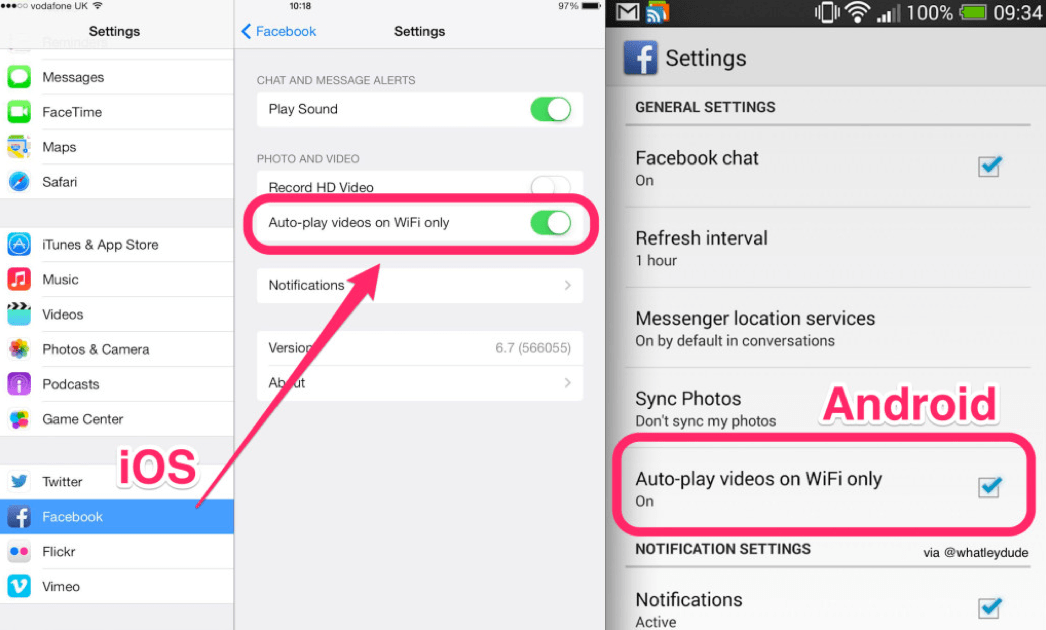
Good? Bad? Annoying? All three? Yeah, maybe. But look, here’s the bad news: on mobile, you can’t actually switch them off. What you can do however is prevent them from playing over your mobile network. In other words, make the videos only download over Wi-Fi only, and ostensibly opt-out of letting them auto-play on your handset.

Here’s how that works.

  • On iOS
    Go to Settings -> Facebook -> Facebook Settings -> ‘Auto-Play videos on WiFi only’
  • On Android
    Go to Facebook -> swipe right to the options pane -> App Settings -> ‘Auto-play videos on WiFi only’

Switch off auto-play videos in Facebook mobile

The benefits of this are two fold:

  1. If you’re hardly ever connected to wi-fi, you can pretty much ‘opt out’ of this auto-play media completely.
  2. If you’re not on any kind of unlimited data plan with your network provider, this will prevent Facebook eating into that precious data.


Hat tip to he who spotted this, Charles Arthur.
Go give him a follow.


83% of Facebook’s UK Daily Users are on Mobile

How many?

Facebook MAU DAU

Source: TechCrunch

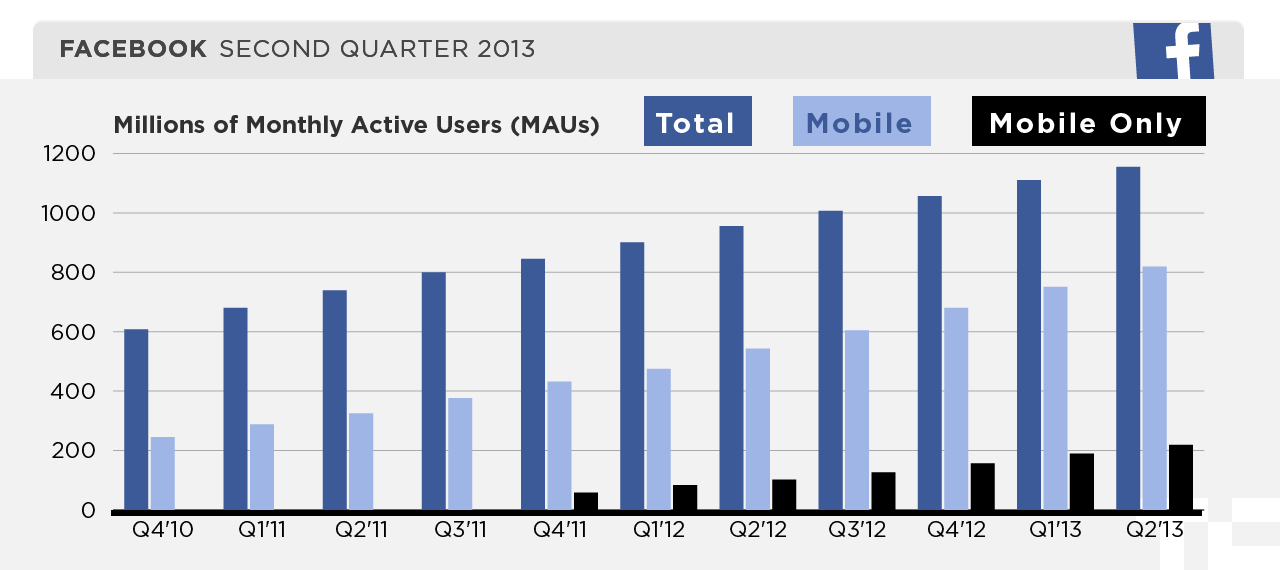
According to the above chart, posted yesterday on TechCrunch, Facebook’s Daily Active Users (DAU) for mobile make up a staggering 83% of all active users.

First off, that’s a MASSIVE NUMBER.

Second, we need to dig a little deeper. As Josh Constine states ‘To be clear, total stats count each individual user as 1 regardless of whether they accessed from desktop, mobile, or both. Mobile stats count each user who accessed via mobile, whether or not they also accessed via desktop.’

What this means is that while they’re not exclusively accessing Facebook via mobile*, 83% of overall DAU do at some point access via mobile. That is still a huge number.

What does this mean?

  1. Surprise surprise, UK users access Facebook from their mobile phones
  2. If you’re a brand using Facebook to speak to your users (y’know, through building apps and stuff) you better be thinking MOBILE FIRST – but again, this is not news
  3. A genuinely surprising amount of new openness from Facebook means that we should be seeing more data like this in the future.

Hurrah and hurrah again.

I’m also left wondering, why on Earth wasn’t this picked up by more trades?

Whatley out.


PS. Reading this on your mobile? Best check Facebook…

PPS. Contrary to popular opinion, this isn’t ‘the first time’ Facebook have admitted this algorithm exists. They did that back in 2010. 

*To get the exclusive number, you’d need Facebook to release a deep dive on this image. But they haven’t done that yet. So we wait.


Facebook Hashtags. Wait, what?

That’s right: According to sources, Hashtags are coming to Facebook.

YEAH?

AND?

WHY IS THIS IMPORTANT? 

I’ll tell you –

1. Ownership
Let’s get one thing clear: Hashtags are not owned by Twitter. They’re used heavily throughout the platform, of course they are, they help track conversation topics. In fact, Twitter is so entrenched in the hashtag that they’ve now taken to describing themselves as ‘The shortest distance between you and what interests you’.

The ‘you’ in that equation is the @name. The ‘what interests you’ part of it? The hashtag. Hashtags really are great for connecting users to the information that they’re looking (on Twitter at least). You know what else they’re good for?  Ad sales. But we’ll come back to that one…

Hashtags are used across other (mostly lesser known) social networks but when your average consumer sees them today, it’s fair to say they immediately associate them with Twitter.

Not for much longer.

Ps. Y’know where else Hashtags are used? Instagram. And you remember who owns Instagram, right? Right. 

2. Graph Search
With the advent of Facebook Graph Search, Facebook really needs to start to getting to grips with meaningful conversation data. What do I mean by that? On a panel recently about Facebook’s latest search product, one of the issues that we discussed was the potentially huge disparity between the two elements of data that will be mined via Graph Search; behavioural and surrendered.

I might Like something, but that might just be to gain access to an app or a game or whatever. That’s behavioural and that’s sketchy at best. Surrendered is even worse; Facebook is trusting its users to enter their personal information fully and honestly – this simply does not happen.  These two issues combined do not an accurate search engine make.

However.

Using hashtags to badge up Facebook posts suddenly creates anchors within user conversations. First, these anchors are searchable and second, you can sell ads against them.

‘Oh hey Twitter, nice ad model you got there. We’ll take it. ‘

You get the idea.

3. Discovery  
Last month, Dan Rose, VP of Partnerships at Facebook, made it very clear that television and the second screen was definitely an area that Facebook was going to move in to. Perhaps not immediately, but soon.

Being able to tag your Facebook post against say, the TV show that you’re watching? That’ll be one major step towards that paradigm.

Earlier this week I wrote about what Twitter’s new Ad API meant for social media ad-planning. With Facebook now introducing (their own version of?) the hashtag, this same model applies: choose your TV show, pick your audience, choose your time slot, go buy ads…

OK, so obviously this won’t happen overnight; Facebook has a billion users and it needs to shepherd them in slowly, v-e-r-y  s-l-o-w-l-y…

But with the new News Feed inbound, Facebook hashtags (and their ads) could soon be just but a click away…


Five things on Friday #42

Things of note for the week ending October 19th, 2012

1. Antartica like you’ve never seen it before
This is the story of a LocalWiki project named ‘Open Antarctica‘. Yes that’s right, not only is there internet in Antarctica but there’s also a LocalWiki project too! It’s a great story and some of the photography is just stunning. Go check it out.

2. I share my body with 20 personalities
This is incredible.

‘The meetings came and went very quickly, like so much of my life. I was sure Valerie said she worked in fifty-minute blocks, but I barely seemed to arrive before I was home again. The conversations while I was there seemed the weird end of bizarre, as well. I didn’t really know what the therapists’ agenda was, but I quickly got the feeling they were trying to nudge me down a particular path. I couldn’t put my finger on it, so one day Valerie came out and said it.

According to her I shared my body with dozens of other people.’

AND

“No, it’s not like that,” Dr Hale said. “You are not here all the time. Other people take control of your body. They have their own separate lives, just as you do.”

Ridiculous as it all sounded, I couldn’t help asking questions.

“So where do I go then?”

He shrugged. “It’s as if you go to sleep.”

“Why don’t I fall over then?”

“Because someone else is awake and keeping the body going.”

—-

The above is taken from an excerpt from ‘All of Me‘ published on The Atlantic earlier this week. I read it, cried a little, then I bought the book.

I reckon you’ll do the same.

3. Best Skyfall tie up yet?
This, from Coke Zero, is kind of awesome

Nice.

4. New Global Pages on Facebook
This is a bit work-based, so if you’re not in the industry you might want to skip straight to number five. However, if you are and you want to know what Facebook are doing to help brands with global and local presences, then AnalogFolk have a decent breakdown.

5. Bodyform
You’ve probably been on some kind of media blackout if you haven’t seen the Bodyform Responds video yet, and while the content is quite brilliant, the conversations that have spun out afterward are considerably much more interesting. From the creative minds of Carat and Rubber Republic it’s been seen as brilliance by some, unauthentic by others and – in some corners – the first proof of the fallacy of social media.

How do you feel about it? Is it just a bit of fun and a fairly tongue-in-cheek response to a comedy video?
Or is it just another salty mess in the never-ending daisy chain of advertising?

You tell me.

—-

Bonuses this week are a bunch of videos that people have sent me; James Cordon, being funny for Sight Savers; the Duracell bunny made out of recycled batteries and LEDs, made out of LEDs; and Coffee, made the small way.

Til next time.


On Facebook? I can see your private messages UPDATED: No I can’t.

But it’s probably worth hiding those old posts anyway…

———————–  UPDATE ———————–

So it’s looking like these posts weren’t Private Messages after all. Back in the old days of Facebook, say between 2007 and 2009, the layout was quite different and, instead of sending each other messages and having to deal with Timelines et al, we used to have the option to write wall-to-wall.

We weren’t all as social-media-savvy back then and believe it or not, your Mum, your boss and all your co-workers weren’t as up to speed either…

Hence the openness of all those wall posts. Major panic subsiding, minor panic still worth cleaning up…

———————————————-

This is happening right now…

Here’s a grab I took before hiding the relevant issues.

The best possible fix is to hit the SETTINGS icon at the top right and hit ‘HIDE FROM WALL’

So far, TechCrunch have picked it up with others following.

If you don’t want people to see your private messages on Facebook, do this now.


Five things on Friday #20

Five things of note for the week ending Friday May 18th, 2012

1. Mother of Dragons Disney T-Shirt
Game of Thrones fan? You’re gonna love this

Available to buy from Etsy (warning: the model used has seen happier days)

2. The Networked Urban Environment
I have few industry heroes and, ever since I saw his TED Talk on ‘Our Mobile Phones‘, Jan Chipchase has been one of them. His latest post, ‘The Networked Urban Environment‘ is (so far) a great read. I’m about halfway through it at the moment and it’s one of the better future-gazing pieces I’ve read in a while.

Imagine never having to look for a parking space ever again. Imagine that from here on out, this problem is solved. Fast-forward to 2025. You’re driving from Brooklyn to Manhattan…because driving in New York City, and everywhere else, has become much simpler a task than it was a decade or so before… or has it?

Definitely worth a look.

3. The OTHER inbox in Facebook
Look, some of you are going to know about this and have known about it for ages. For the rest of you (like me, about two days ago), this will completely and utterly blow your mind.

A couple of nights ago, the girl casually mentions how useful it is that the ‘other’ inbox is on Facebook’s iPad app.

“I’m sorry, what?”

“The other inbox on Facebook, I’ve just found it on the iPad app. Cool.”

“Hang on, rewind, what is this ‘other’ inbox.”

“The other inbox.”

“No, you’re just repeating the same thing.. what is the other inbox.”

She shows me.
It blows my mind.

It turns out that if someone isn’t your friend on Facebook and then they message you, their messages end up in the other inbox.

This is ridiculous. First off, this is NOT obvious. I’ve missed a whole bunch of messages from people I’ve met from all over the world! Second, this will also explain why a whole bunch of messages I’ve sent to non-friends haven’t responded either (at least, that’s what I’m telling myself).

Admittedly, a fair amount of the stuff in there is spam, but still – I’m into double figures on the amount of messages I’ve missed. I’m gutted. But hey, I know about it now and will check it more regularly.

Every day’s a school day.

4. The Marketing Academy: The New Batch
Two years ago, almost to the day, I was waking up in Maidenhead to commence my first few days as a Marketing Academy scholar. Next week, the next batch of lads and ladies to go through the year will kick-off their own journey. One of them is a really good friend of mine and I’m chuffed to bits for him. Best of luck to all of the new starters.

You’re in for an amazing year!

5. Howard Stern / Sacha Baron Cohen
An extremely rare out of character interview with Sacha Baron Cohen, (thank you Howard Stern). Cohen says himself this is only the third time he’s ever been interviewed as himself (preferring to turn up to talkshows etc as his creations such as Ali G, Borat or, most recently, The Dictator) and is clearly a fan of Stern’s work.

Engaging and enlightening throughout, I’ve been listening to it while writing this blog post and it really is brilliant. Featuring hilarious anecdotes about the comedy-writing process, the dangers of filming Bruno in Arkansaw and the unforeseen perils of attempting to sneak the ashes of Kim Jong Il into TheAcademy Awards

Listen now, before it gets taken down.

___

Bonuses – This Could Hurt for iOS looks pretty good (I’ll be downloading as soon as I hit publish); this bookcase + chair hybrid just made my ‘want’ list; and these 1950’s takes on the Batman universe from artist Denis Medri are fantastic. Poison Ivy + Bane are definite faves.

Liked this week’s edition? Hit the Tweet button and tell your friends.

Whatley out.

Is Play.com breaking Facebook TOS?

To be honest, I’m not sure. Take a look at this

@playcomakaplay.com

Facebook Timeline for brands is brand new and as such, the nuances and intricacies of the new user interface are still being worked out*. However, a good place to start when dealing with a new service structure is the service supplier themselves. In this instance, that’s Facebook.

Their [new] terms of service (specifically to the cover photo) state:

__________________________________

All covers are public. This means that anyone who visits your Page will be able to see your cover. Covers can’t be deceptive, misleading, or infringe on anyone else’s copyright. You may not encourage people to upload your cover to their personal timelines.
Covers may not include:

  1. Price or purchase information, such as “40% off” or “Download it on socialmusic.com”;
  2. Contact information such as a website address, email, mailing address, or information that should go in your Page’s “About” section;
  3. References to Facebook features or actions, such as “Like” or “Share” or an arrow pointing from the cover photo to any of these features; or
  4. Calls to action, such as “Get it now” or “Tell your friends.”

__________________________________

I interpret that asOi! No special offers on your cover photo!‘ 

2012-04-10-21-50-34_DC3834B8-9CA6-4E2E-9FB6-C71F965AC246

…but I could be wrong.

Being unsure (and in constant search of a decent debate), I asked Twitter

Ask Twitter

The crowd certainly think so – although, funnily enough, Play didn’t respond.

Covers including special offers certainly seem off limits from the Facebook’s terms of service and, in all honesty, that’s what I’ve been advising friends, colleagues and clients when it comes to embracing Facebook’s new Timeline layout…

Either way, Play are sailing pretty close to the wind. Wouldn’t you say?
Friends, readers and peers – what do you think?

Better yet, why don’t we ask Play?


*for example: knowing how many characters you should use in your ‘about’ section.