How do you solve a problem like building gaming communities on Twitter? (aka ‘X’)

Ten years ago I was part of the research team that uncovered the slow death of organic reach for brand pages on Facebook.

Led by Marshall Manson and using data from over 100 agency managed brand pages, totalling more than 48 million fans, the Social@Ogilvy team were able to ascertain that organic reach for Facebook was facing a precipitous decline.
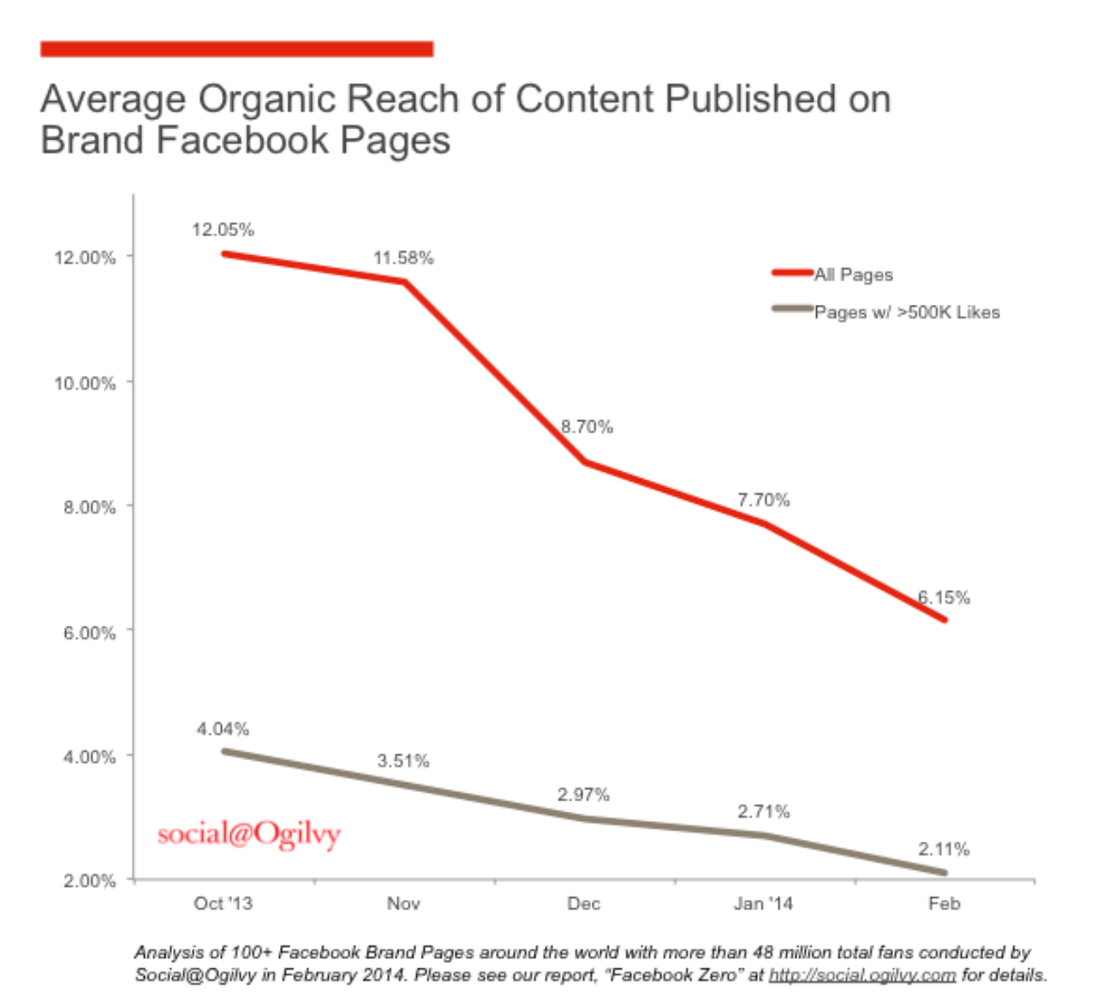

From October 2013 – February 2014, we could demonstrably prove that organic reach had dropped from 12% to 6%. That means for fan pages with 100 fans, any post with no paid media behind it would only reach six people.

In short: the free ride for brand fan pages was over. And the age of paid social had begun. Other social platforms soon followed. And in the years that followed, algorithmic content serving became king.

Since then, it became my standard to advise clients as often as possible to steer clear of an organic only approach to social media. To instead diversify your platform investment. To find new ways of not only building community, but doing so on a platform where you have ownership of – or at least reasonable access to the data. Valuable data that you can use for analysis, segmentation, retargeting and beyond.

Above all else, we eschewed the outdated KPIs of follower counts and fan chasing and instead focused on sharp paid media targeting and kick-ass creative.

In short: vanity metrics ain’t it.

If the lesson to stop building a fan following on one social platform wasn’t clear enough by now, you only need to look at the trash-fire that is the far-right, transphobic, sex-trafficker-supporting social platform formerly known as Twitter, X.

Earlier this year you could still see games publishers putting paid media spend behind asking X/Twitter users to ‘Follow this account for the latest updates’ about a new game.

Eg:


This is nuts.

According to the most recent research, the average half-life of a tweet is 24 minutes. Combine that with X/Twitter now purposefully obfuscating the organic reach metric (instead going with the non-unique nebulous number of ‘impressions’ – all views count, not just uniques), chasing vanity metrics is, at best, a dated KPI from the late noughties and at worst – a complete waste of time. Putting paid media behind that chase, even more so.

This alone should be cause for concern. When put against the recent shift of X/Twitter’s ownership, politics, and frankly, complete rejection of any and all brand safety – putting any spend into X/Twitter at all is… ill-advised.

OK so what’s the solution?

You might be reading this and thinking ‘Well, that’s not my experience’ – and you might be right. You might be experiencing a fantastic community on the platform and everything is amazing.

I doubt it, but you might.

You might also be reading this and screaming ‘James, Discord solves this!’- well, that is and isn’t the answer – the answer is and should always be ‘it depends’.

It depends what it is you’re trying to do. It depends on where you are in your game lifecycle. It depends on how much time/money you’re able to invest.

Learning how to diversify, test, learn and then commit. That’s the real trick.

But let’s get into it.

From AAA publisher to bedroom indie, the first question should always be: What is your objective? What is the one thing you’re actually trying to do?

‘I want brand awareness, community engagement, and sales’ – is not a single-minded objective. It’s three. The serious marketer chooses one.

‘I want to get 5000 followers on Instagram’ is not an objective. It’s a measurement. A measurement of what objective is the question.

‘I want an engaged community that I can reach with news and updates about my game’ – then the answer might be building Discord (for the core) or in fact, email (for mass).

Discord does of course have its pros. And many if not all of you reading this will be familiar with the platform. It is undeniable how useful it can be for developing that early/golden cohort of interest. However, you need to use it properly to drive engagement and interest. Talk to your fans, post regular / exclusive content. Engage in conversation. In Discord you have a captive audience, an audience that you can guarantee reach – so use it wisely. Don’t just auto-post your X/Twitter content. It’s lazy, disrespectful to the community and ultimately won’t deliver against your objective. You know who you are.

What about email?

We are without doubt in the age of the newsletter, whether you use Substack, Mailchimp or Ghost, newsletters are a great way to speak directly to people that actually want to hear from you. You get to own the first party database (hello, email!) and you get to sidestep the algorithmic content serving lords and masters of the social platforms. If email isn’t in your marketing channel plan, why not?

What else can we look at?

Well once again it comes down to your objective. If you’re building awareness, then for a small amount of investment you can do a surprising amount. From reaching new fans, building memory structures for existing, or even just giving announce trailers a paid media bump can be relatively simple and surprisingly cost effective.

If you need to drive interest on pre-orders, then ‘buy now’ carousels or stories/reels might do the job – and with the right creative execution then this too can deliver the results you’re after. All it takes is a clear brief and a commitment to a single objective.

There’s a lot here that should not come as a surprise.
It’s not rocket science.

The point is: when it comes to games marketing, the platform landscape is in flux. Single platform organic engagement can no longer be relied upon for reach and follower/fan vanity metrics are as out of date as the opinions you can find on the platforms you’re squandering effort in.

Endlessly chasing the same core set of gamers to like or follow the same accounts for single digit amounts of organic reach or worse – impressions – is a colossal waste of time and money. Blending a cross-platform organic approach with paid media, underpinned with an owned data driven platform (hello email), all in service to a clear single-minded objective is the route to genuine growth.

So how do you solve a problem like building communities on X/Twitter? Well the answer is simple: this problem was solved years ago, I’m just wondering when everyone else will catch on.

Note: this is an updated cross-post from an original Linkedin entry (where the comments are interesting and worth a look also).

Thoughts on ‘Digital’ job titles

Aka: ‘Creating noise where there was no signal in the first place’

Back in January, associate professor of marketing, brand expert, and Marketing Week columnist, Mark Ritson, published a piece on the ‘death of digital’ job titles.

It went a little something like this:

Screen Shot 2016-02-15 at 21.26.31

If you’re familiar with Ritson’s column, you can pretty much imagine the rest. I’m not one to bite when bait is so blatantly waggled in one’s direction but this is something that I’ve been niggling on for a while and, the other day, said niggle floated to the surface…

Via what some of you might refer to as ‘a mini Tweetstorm’:

//platform.twitter.com/widgets.js

Oh wait, a bit of background first. In case you missed it, Ritson’s piece came in response to another huge piece of industry news (January’s a slow news month) and that was [ad agency] Adam & Eve DDB’s move to ‘axe’ said D word from all job titles.

Ritson said:

The news that adam&eveDDB has dropped the digital designation from all its job titles came as no surprise last week. Despite the prevalence of the D word and the omnipresence of digital planners, digital strategists and digital marketers under every lamp post, nobody in the know ever doubted that the prefix would eventually become an anachronism.

And, unsurprisingly, the article (and the ‘news’ it referenced) became the talk of the town (which, when you think about it, is a&eDDB’s raison d’être).

And now everybody’s talking about it.

//platform.twitter.com/widgets.js

What I actually meant was #PredictionsBreakfast (hey, I was grumpy – I got it wrong). You know the event I’m talking about, right? It’s the one where I said this:

//platform.twitter.com/widgets.js

Someone in the audience (I think – it might’ve been Andy Oakes challenging us) asked the question ‘Are digital job titles dead?’ – I think my response was something along the lines of a big sigh, laughter, and then ‘no’.

Which is kinda how I got to the next bit –  

//platform.twitter.com/widgets.js

And I’d say that’s a fair enough comment. The term ‘digital’ means so many different things to so many different brands, agencies, publishers, partners, vendors – the list goes on – to simply ‘do away with it’ because it seems on trend is quite possibly the most ridiculous thing I’ve ever heard.

That said, I mean what I say: it could become redundant one day, maybe a generation from now – when the entire marketing job suite fully understands and gets what it means (and to whom). But that’s not going to happen this year and I very much doubt it’ll happen in the next.

And…

//platform.twitter.com/widgets.js

Which means that for the brands, campaigns, and projects that we work on, digital is a core component to nearly all of them. Do our partners need a experts? Undoubtedly. Do they feel more comfortable knowing they have a specialist on the case? Definitely. Would they give two hoots if we dropped it completely? Probably not.

But in the same way that products are designed to meet a consumer need, so are jobs created to meet client demand.

//platform.twitter.com/widgets.js

A small correction on this point. If you only read the headlines, you’d be forgiven* for thinking that a&eDDB had killed ‘digital’ only to replace it with the word ‘interactive’. The truth, as always, is slightly different. What a&eDDB have actually done is recategorised media into three areas: film, display, and interactive (more on that later).

So yes, replacing digital with interactive is a mistake – but let’s be clear: that is not what has happened here.

What has happened is that someone’s kick-started an intelligent debate about how we move the industry forward – and that a great thing (and should be commended).

Mark Ritson loves a rant (and I love him – sincerely, if you ever get a chance to see him lecture, GO), but on this there is a simple response: the industry just isn’t there yet.

//platform.twitter.com/widgets.js

//platform.twitter.com/widgets.js

…which means we’ll continue to have digital strategists, creatives, directors, etc… whatever’s required to get the job done.

Because ultimately, isn’t that the most important thing?

Thanks for reading.

JW.

__________________________

APPENDIX

– aka, related Tweets that I could find commentary for but are still worth your time.

//platform.twitter.com/widgets.js

Also

//platform.twitter.com/widgets.js

And my personal favourite…

//platform.twitter.com/widgets.js


*By ‘forgiven’, I mean ‘not forgiven at all’ – you should work harder at knowing more.

Trend Churn

When is a trend not a trend?

Recently I shared with you the official Ogilvy social media trend report that I co-wrote with a lovely chap named Marshall Manson.

Throughout the process, Marshall and I played around with what we each thought our trends were for the year, stress-testing the notions, cross-examining the evidence (and each other) and as a result, some awesome stuff made it in.

Sidenote: co-writing is fun. If you write, try and write with someone some time. It can be both challenging and rewarding and if you’re lucky, like me, you’ll strike gold with someone super smart to do it with.

There were other trends and ideas too mind: ones that we didn’t have the time to investigate properly, ones that we just couldn’t find enough (read: any) evidence to support, ones that we had put some thought into but hadn’t completely finished noodling on them yet, and ones for which we had a catchy title but no real substance (basically 90% of the trend dross out there today).

Normally we’d cut those but this time however we decided to keep some of those unfinished trends in the final document and, under the heading ‘Random stuff we haven’t figured out yet’,  they can be found from slide 40 onwards in said presentation.

Why am I telling you all this? Well, the one that came closest to making it was a little thing that I’d been ruminating on called Trend Churn.

_____________________________

Trend Churn?

The idea of Trend Churn was predominantly borne out of the micro trend known as ‘NORMCORE‘ making the leap from weird-ass white papers to actual ATL advertising and then arguably failing.

Miserably.

Gap – ‘Dress Normal’ / Wieden + Kennedy

dressnormal

“Sales at the Gap continued to drop in November, as its roundly-criticized “Dress Normal” fall campaign failed to drum up interest from consumers.

Gap’s comparable sales for November were down 4% versus a 2% increase last year. Sales were down 7% year-on-year in October and declined 3% in September. Gap’s other brands, Old Navy and Banana Republic, saw sales increase this last month — so this is a Gap-specific problem.” – Business Insider, December 2014

The word itself, ‘Normcore’, first came to my attention in a K-Hole trend report entitled ‘Youth Mode

The Youth Mode report introduces the problem of Mass Indie culture—“where everyone is so special that no one is special”—and proposes a new aspirational model in #Normcore, “a way of being that prioritizes self-identification over self-differentiation.” Normcore is like the smiley face emoticon, which K-HOLE uses so affectively: inclusive, basic, and human; an invitation to engage.

Makes perfect sense right? Right.

Turns out the whole thing was a non-starter. A non-trender, if you will.

And that is a trend itself.

The whole schtick I was pitching at Marshall was the idea that when the bright young trendy creatives are sucking up all the sexiest trend reports all at the same time, constantly under pressure to deliver The Next Big Thing, then surely at some point or another the Emperor’s latest threads will wind up in an ad somewhere.

shadwell

Samsung – ‘Be Your Own Label’ / Cheil Worldwide

“Samsung set to discontinue Galaxy Alpha in favor of cheaper phones. Production of the metal Alpha will reportedly end when the current inventory of materials runs out.” – The Verge, December 2014

The thing is with writing [a decent] trend report is that you really do need a number of proof points that at least go some way to validate your thinking.

Without those, it’s just a hunch report.

With Trend Churn, I didn’t have the data . I knew that Normcore had leaked into adland but I couldn’t find anywhere that actually measured its impact. Not without any meaningful evidence anyway. Everything in this piece so far is pretty circumstantial.

But you can see what I was noodling at.

I’ll leave you with this piece of solid gold, nabbed from an amazing blog post (from an amazing writer – Jenka Gurfinkel) called ‘The Possibly Real Trend of Real Trends

“In the days of slow-moving, 20th century media, emergent cultural expressions had time to incubate below the radar before they tipped into mass awareness. Pre-Tumblr, the only way to find out about a new cultural emergence was through the unassailably real channel of one of its actual practitioners. There was no need to wonder about veracity. Now, a nascent trend doesn’t really have the time to mature into something legitimate before the trendhunting hyenas descend upon it, exposing it to a sudden burst of scrutiny. What remains becomes neither niche enough to be authentic nor mass enough to be indisputable. Maybe no new trend seems quite real because it hasn’t had the chance to become real before we’re looking it up on urban dictionary and just as swiftly are click-baited on to the next dubious dopamine hit of meme culture.”


And in that one paragraph, Jenka nailed exactly the point I was getting at.

Watch for this in adland throughout 2015.

There’ll be more.

Much more.


..

As if you’ll notice.


Social Media Trends for 2015

2015 trends, innit.

Republished [with edits] from Social@Ogilvy.

Screen Shot 2014-12-19 at 15.23.39

Back in December 2013, Managing Director of Social@Ogilvy EAME, Marshall Manson asked me to co-write some kind of trend prediction document for 2014. I think his words at the time were something like ‘Look, everyone does them, and everyone slags them off but Ogilvy should have one and I think we could put something decent together’.

We laughed. We agreed. And then we got to work.Screen Shot 2015-01-11 at 22.05.11

A few emails back and forth and a couple of working meetings inbetween and Marshall and I came up with a fairly decent document covering off our shared trend predictions for the year ahead.

Such was the feedback of said presentation, we decided to it again for 2015.

WOOP WOOP.

So, at the bottom of this post you’ll find our latest work. It contains a brief overview of our predictions from last year as well as a more in-depth look at the thoughts, trends and predictions for the year ahead. However, if you’re a big cheat and don’t want to read the presentation (seriously, what kind of monster are you?) here are the cliff notes:

TREND PREDICTIONS FOR 2014: REVIEW

Marshall and I scored four for four with, ‘Disposable Content’,Brand Banter’, ‘Facebook as a Paid Media Channel’, and a little thing called ‘Sub-dividing Communities’. Each and every one of them came true and, well, we’re pretty chuffed about that (and the evidence is in the deck below – you didn’t think I was going to give it away that easily, did you?)

Without further ado, let’s move on to our:

TREND PREDICTIONS FOR 2015

Trend 1. Twitter Zero
Algorithmic content serving is coming very soon and, when it hits, and very much like Facebook before it, brands will need to understand not only what paid products are available but also how to use them.

Trend 2. The Video Battle Royale
‘Video’ was one of my ‘things that are not trends for 2015‘ however the BIG BATTLE FOR VIDEO AD DOMINANCE is 100% going to be a thing next year. With Facebook and Twitter both going all in on video-based ad products, we’re also predicting that Instagram’s existing ad products will also soon include video. Did you know Facebook outdid YouTube, on the video front, in 2014? We don’t think Google will let that lie… do you?

Trend 3. Teens & Anonymous Platforms
Less of a trend prediction more a piece of social / anthropological commentary, this section is about there now being a generation of teens who have grown up not knowing a world without an Internet. So what does ‘youth Internet’ look like? And why?

Check it out, you’ll see.

And hey, tell us what you think on Twitter (@whatleydude or @marshallmanson) – we’d love to get your feedback!


2013: in review

Where do I start?

Screen Shot 2013-12-31 at 17.35.03

Photo from my trip to Aldwych Underground station in November.

Let’s start with numbers.

THE BLOG

The most popular post of 2013 was the publication of a rare DJ set from The Avalanches (I can thank Josh Russell and an appearance on Reddit for that particular bump), and coming in at a close second was my super excited review of PACIFIC RIM back in July.

Overall, stats-wise, 2013’s numbers are down on 2012’s. As you can see below –

Site_Stats_‹_whatleydude_—_WordPress-3

This is down to a number of things. First off, in 2012 I wrote up ‘Five things on Friday‘ every single week, without fail (maybe I should bring that back for 2014). Blogging regularly increases traffic – who knew?

That lift in 2012 combined with a general decrease in posts this year means the disparity is quite large. I’m not kidding on the post decrease either. YOY 2013 has seen my lowest publishing rate for some time. The lowest in seven years in fact.

Screen Shot 2013-12-29 at 16.49.23

[more here, thanks Jetpack]

So why the dip in output? 2013 has been a very busy year.

WORK

I’ve had pretty much had two jobs for most of 2013 (this is changing next month, but more on that in the New Year – shh), which has been as fantastic as it has challenging. From awesome travel brands kicking ass on Twitter, through to award-winning innovations for an online furniture retailer. To say 2013 had been ‘a bit full on’, would be an understatement – but in the best of ways.

I’m staying true to my mantra of ‘Great work, with inspiring people‘ – and long may it continue.

AMBITION

This time 12mths ago, I set out two very public ambitions. Speaking and Running. How did I do? In the former I set out to beat 2012’s rather lacklustre total of THREE and at least match 2011’s total of SIX.

Looking back over 2013, it looks like I topped out at a grand total of TEN. Each one unique in its own way and each one different from the one before. If you helped me achieve this goal in 2013, then thank you very much – I am chuffed that I managed to beat it so definitively.

On the running front, I started on Jan 1st 2013 at zero. I’m finishing on Dec 31st at 228km, with a couple of charity efforts in there for good measure.

Highlights? The British 10k for CALM and completing the Tough Mudder with Team Expedia at Ogilvy. Again, if you helped me achieve this goal in 2013 – then thank you. I feel an enormous sense of achievement, and I couldn’t have done it without you.

In the New Year I intend to continue these two even further. The speaking one I’ll continue plugging away at it – it isn’t the number of gigs, it’s the intention to keep doing them (and I’ve already got three pencilled in for 2014, and I figure that should be my baseline). And on the running front, I fully intend to smash the 300k marker for 2014.

Hurrah and hurrah again.

PREDICTIONS

In the summer of 2012 I wrote three social media predictions for 2013. Let’s review:

Prediction 1: The outsourcing of community management to emerging markets
I’ve got no proof of this happening yet. But I still think it will, if it hasn’t already (and I just haven’t seen it).

Prediction 2: 2screening + Advertising
The big thing I covered here was about ‘super micro targeting’, eg: Twitter allowing media planners to buy against actual TV shows. BOOM.

Precition 3: 4G networks spurring further innovation
I think I might have been a bit too hopeful on this front. 4G isn’t really hitting the ground here in the UK quite yet, so maybe it’ll be another year or so until it bears fruit.

Final score? 1/3.
Rubbish. My predictions for next year are out, hopefully I’ll do better next time.

FILM & MUSIC & GAMING

Film: I really went for it this year, I saw loads but managed an average of one write up a month (12 film reviews).
Music: Spotify’s got me covered.

Spotify

Gaming: I jumped off the Xbox ship and went for the PlayStation 4.
You should do the same.

ADDITIONAL BITS AND BOBS

AND FINALLY: LIFE IN GENERAL

I’ll be honest, 2013 has been a veritable roller-coaster of a ride. With super high ups, and woefully low downs. At one point, I honestly didn’t know if I was going to make it out alive. But here I am, in spite of it all, still kicking and at the precipice of a whole new chapter.

Who knows how it will work out.

I made a decision a couple of years back to keep a fair chunk of my personal life offline, and I’m pleased to say that I’m sticking to it. My friends, my true friends know where it’s at – and that’s all that matters.

There are some amazing people out there that have helped me through this past year. Friends and colleagues, old and new – you know who you are.

Thank you.

Next year is a whole new adventure.

BRING. IT. ON.

COOL STORY


How to write a trend document

Sharing is caring.

How to write a trend doc

A couple months ago, at work, the new group-level European head of social media challenged me to come up with a couple of ideas that could form part of a trend document for the New Year – ‘We need a trend on one slide, and then maybe a slide on what to do about that trend after – can you do that?’.

Yes, was the answer. Of course. And the end result can be seen on the Social@Ogilvy blog with supporting slides on Slideshare.

But the thing is, whenever I try to come up with new ideas, I always start with words. Yes that’s right, WORDS.  Yes they might end up in a presentation at some point, but I never start with Powerpoint. Ever.

I start with a blank page, a clean browser (eg: no tabs open except search), some questions, and normally one idea that I’ve been noodling to get me going.

The clean page and browser were easy. The questions? They’re as follows:

  • What’s the trend?
    Does it have a name? What’s the angle?
  • What are the key drivers?
    Aim for three. If you have less, think of more. If you have more, reduce.
  • Examples?
    Again, three is the magic number. If there are no examples, then your trend is a prediction [and not wanted here; save it for another document].
  • Implications?
    The inevitable question: what it does this mean for brands?!

Using those four guiding principles, it’s relatively simple. I ended up writing a few for Ogilvy, two made the final cut, and I’ve developed a couple more for publishing elsewhere. But for the benefit of this post, I’ll just show you the first draft document that went onto underpin the aforementioned final presentation.

Copied and pasted direct from Word –

___________________________

TREND: DISPOSABLE CONTENT

DRIVERS

The Content Churn
With content marketing the buzz term of 13/14, every brand (and their corresponding agencies) is on the hook to constantly create content. Continuously churning through idea after idea, meme after meme… The desire to continually satiate the online hunger for more, more, more means that the content created in turn becomes smaller, and quicker to consume.

Unsurprisingly, this inevitably leads to mistakes. Which in turn leads onto our next driver…

Tweet & Delete
With the inevitable errors that happen in 24hr news rooms content hubs, the chances of a piece of work slipping out of the door without the correct sign off increase. It happens in all parts of the marketing industry, this isn’t new to social media.

However, unlike an offensive print ad, or a sexist TV commercial, social channels allow media owners to reach into the past and delete the offending content – as if it had never existed in the first place. This, of course, comes with as many risks and it does rewards. The latter in that it can be missed by many; and for the former? Post-deletion infamy on the Buzzfeeds and Reddits of this world.

Speaking of infamy…

Teens’ ever reducing content legacy
With the advent and subsequent global penetration of social media, the professional adults of today are finding that the penchant for over-sharing that was so new and exciting is slowly coming back to haunt them. Well, we’ve got news for you on this: the kids are wise to this one. The generation growing up RIGHT NOW is unlike no other before. This is the generation that has never known a world without the Internet (can you even imagine that now?) and they don’t want the selfies of today messing up the job interviews of tomorrow.

EXAMPLES

Snapchat [Platform Example]
It’s an obvious choice but it simply cannot be ignored. Given the voracity at which teenagers have embraced the platform and its mission-impossible-esque way of dealing with messaging, it’s no wonder brands are also getting in on the act.

Brand Example 1: 16 Handles was first with its voucher offer.
I like this.

Brand Example 2: Taco Bell + Snapchat collaboration = Burritos.
First(?) example of ‘mass broadcast’ from B2C.

Brand Example 3: Doritos for Halloween
UK example, unsure of purpose/ROI – but interesting as it mentions additional support from other social channels.

Brand Example 4: Charmin / Thor 2
One more than needed, but want to keep it as it fits with/proves ‘Tweet & Delete’.
Plus: it’s brilliant.

IMPLICATIONS

The marketing strategy goes by many names. From agile to reactive, from responsive to real-time – but the preparation and commitment required to make throwaway content such a success remains the same.

Preparation, preparation, preparation
Chance favours the prepared mind, and to get that viral smash, you need to have the approval processes sorted, the brand guidelines locked, and the right people in place to execute. Speaking of which…

Want an A game? Recruit the A team
Too many times do we see headlines that ostensibly blame young talent for social media errors – ‘The intern did it!’ or the like. The mistake here isn’t with the monkey, but in fact with the organ grinder. You need damn good talent to make great content that’s worth missing; so put your best men and women on the job. When it comes to the ephemeral, it’s time to get incredible

Be quick, be nimble, be agile
There’s no point in having the right processes and the right people if you simply don’t have the prowess to get it done promptly. Speed is of the essence.

REMEMBER: Your content is one thumb swipe away from being wallpaper. The trick is making that wallpaper stick.

APPENDIX

Unfinished ideas and other sources/thought starters

Guardian piece on messenger apps vs Facebook
TechCrunch on THE WHY of ephemeral media

Defining ephemeral media-
Amazing ideas from friends – which led to this
Good stuff from Amelia too (she should write more)

___________________________

And that’s about it.

Some structure, some research, and some words.

Do that a few times over, employ a couple of trusted friends to do the proof reading, and et voila: one trend document (here’s another example from 2012). If you’re really lucky, someone might even turn it into a presentation for you.

——–
Oh, and this is by no means the definitive way to write these things, it’s just how I do it.
I hope its useful. 

Achievement

A week ago today, I published this on Facebook –

The Tough Mudder was epic. I’m still aching (slightly). But we’ve raised over £1200 for charity and, on top of that, one week later, I still can’t believe we did it.

Tough Mudder. Before & After. Winner.

The sense of achievement is palpable.

And I am happy.


Team Ogilvy London vs Tough Mudder UK

“We came. We saw. We kicked its ass.”

Tough-Mudder

Saturday, October 5th – my Ogilvy colleagues and I completed the Tough Mudder North West challenge. 12 miles. 25 obstacles. One amazing feat.

Back in May, I started working with Ogilvy & Mather London Advertising on the Expedia UK account. The team were awesome and welcomed me with open arms. However, as an official member, I was told that I would have to join them in their Tough Mudder.

//platform.twitter.com/widgets.js30mins later (after much heckling and also the clincher comment ‘James, it isn’t a race – it’s about TEAM BUILDING’ – I’m such a sucker for that stuff), this happened –

Turns out the best date we could all do it wasn’t in September after all. It was today. And guess what? We nailed it.

WINNERS

— Briony, me, Amelia, Harriet, Stephen and Joey —

There was blood. There was mud. There was euphoria. We climbed 12ft walls, we ran through electric cables, and we plunged ourselves into ice – and that is very much not even the half of it.

So far, we’ve raised just over £800 £1000(!) for Action on Bladder Cancer, the charity of choice of the Expedia UK marketing team, and there’s also (perhaps somewhat delirious) talk of making TM an annual Ogilvy event too – amazing.

If you’d like to sponsor me, or anyone else on my team, then you can do that on our dedicated sponsorship page (please do, even if it’s only a couple of quid it’d be appreciated).

I think I have a longer, more meandering post about how much of a personal achievement I feel this is (given that I only started running back in January), but that can wait for another day.

In the meantime, I’m headed home for a very long bath and while I do that, you’re going to sponsor me, right?


UPDATE: Photos now up on Flickr.

Ads on Instagram are already here. But are they legal?

Place your bets now please…

The facts:

  • The Facebook-owned photo-sharing site, Instagram, does not have a business model (yet).
  • ‘Official’ ads will be coming soon (if on hold), but celebrities (and their sponsors) aren’t waiting around.
  • The US Federal Trade Commission state that ads on social media must be labelled as such*.

With those key points in tow, let’s take a look at a few recent examples of how ads have begun to appear on the this particular social network –

EXAMPLE 1:  Lebron James, Nike

Copy: ‘These are simply the best!! Ultra comfy and can wear them with anything. I’m ordering 100 pair right now. #kicks #Nike #family’

Is this an ad? It could be deemed as such, certainly. Is Lebron James sponsored by Nike? Definitely. Is ‘endorsement of product across social media’ part of his contract? Maybe. This is something I’ve talked about before. In short: how do social media advertising rules work when it comes to sponsorship deals? Should this image have an #ad tag?

Let me know in the comments.

EXAMPLE 2. Kim Kardashian, Sun Kissed

Copy: ‘Sprayed tonight after watching KKTM! My legs are soooo dark! Loving Kardashian SunKissed! #AvailableAtUlta’

If this isn’t an ad, then I really don’t know what is. Let’s review –

  1. We’ve got a CLEAR product shot!
  2. We’ve got a a massive ENDORSEMENT (Kim’s ‘LOVING’ it guys).
  3. Finally, that final hashtag? Oh, hi there call to action. How you doin’?

All of these elements add up to a clear piece of advertising. Is it marked up as such? No. While you could argue that KK is endorsing her own products here (so no money has officially changed hands, and this is technically not actually ‘paid for’ advertising) and therefore she’s exempt from the advertising guidelines… but still, it’s a grey area at best.

EXAMPLE 3: Nicole Richie, Suave
(image via Ad Age)

Copy: ‘Ad: My new don’t-leave-home-without-it product? Moroccan Infusion Styling Oil from @SuaveBeauty! Check out ways to add brilliant shine to your style here: bit.ly/XDJOkp’

OK, so this works. Finally someone is using the ‘Ad’ tag properly when it comes to advertising via earned media – hurrah! The interesting point here is that the brand in question has gone on record and said that the above image was indeed part of the existing partnership between the company and Ms Richie. Again, making things even clearer. Perfect.

——  So what can we learn from this?

There are three things at play here –

1. Without a business model, Instagram, and therefore Facebook, is clearly missing out on potentially lucrative ad dollars being bought and sold on their network.

2. Celebrities, and their sponsors, are getting smarter, faster.

3. In the same way that the ASA took Snickers and Nike to tribunal here in the UK, I wouldn’t be surprised if the FTC went knocking on the doors of a few US-based brands in the very near future.

It sounds so obvious when you say it out loud but, when it comes to paid-for endorsements on social media, clarity and transparency are key.


*Here in the UK, the ASA have a similar policy but the terms regarding disclosures are not as explicit.

NEW Twitter Cards for Brands: The Impact

Twitter has quietly launched new markup documentation for twitter cards…

And brands should take note. Why? Let’s start at the top –

What are Twitter cards?

Twitter cards are a fairly recent addition to the Twitter suite of tools that allow richest media content (images, videos, and blog post previews – or ‘photo’, ‘player’, and ‘summary’ respectively) to be displayed in-stream. Launched last year with a few partners such as The New York Times and WWE, these expanded Tweets are another way for publishers to engage with Twitters in a more meaningful way.

Since June last year, Twitter has slowly released this functionality both as new partnerships with other media houses; and as developer documentation for others to add to their own websites and blogs.

Why are they useful?

It’s simple: Twitter cards enable a preview (or in some cases a full view) of the content linked to in the Tweet. This means users of the official Twitter client can consume content without leaving the app and, if they do have to click out, they have a better understanding of what they’re about to engage with.

So what’s new?

Overnight, Twitter launched three more variations of the Twitter card on top of their ex: App, Gallery, and Product.

The first two work as follows –

App
This one shows information about an app; including the app name, icon, description and other details such as the rating or price. If your app is in the AppleApp Store or Google Play, then the corresponding information there can be pulled in accordingly.

Result? More app downloads, hurrah! 

Gallery
This new card represents an album or a collection of photographs via a preview of the photo gallery. This card indicates to a Twitter user that a gallery has been shared, as opposed to just one individual photo.

Result? More imagery = more engaging = increased CTR.

That’s all well and good, but it’s this next third one that I find most interesting:

Product
The Twitter product card can represent different products by showing an image and description, along with up to two customisable fields that let you display more details like price or ratings.

On both web and mobile, it would look something like this –

Result? MORE. SALES. It’s that simple. 

In short: this is fantastic.

This basically says that brands can now, with a simple piece of html markup, preview actual products, for purchase, including reviews and/or pricing information into their followers’ Twitter streams. Combine that with some decent tracking and you finally have what looks like a decent social sales ecosystem.

Think about that for a second; instead of ‘Hey! Look at this thing we’ve launched! [link]’, you now get ‘Hey! Look at this thing we’ve launched [image] + [price]’.

HUGE.

We’re already talking to our clients about getting this markup integrated into their websites’ product pages, and we’ve got a funny feeling a few of you might be too.

Exciting times indeed.