To say I’m a little excited about The Dark Knight Rises would be an understatement. It is the end of the Nolan-universe era and it promises to be… something else.
I’m extremely, extremely lucky to have worked quite close to the film – especially around the 6min prologue released at the back end of last year. Even that was enough to work me up to a frenzy. Tom Hardy, one of my favourite actors, looks absolutely incredible as BANE.
I hate the word ‘movie‘, but this site, MOVIEBARCODE, (that I found (and have been meaning to blog for) just over a year ago now), I can forgive for the staggeringly gorgeous work it produces.
The premise is simple, but Flowing Data describes it best –
Choice of color in a movie can say a lot about what’s going on in a scene. It sets the mood, changes the tone, indicates a change in point of view, so on and so forth, which is why moviebarcode is so fun to click through. The concept is simple. Take every frame in a movie and compress it into a sliver, and put them next to each other. Voilá. Movie barcode.
Seriously, as a film lover this site is a veritable treasure trove of thematic insight. Plucking a few favourites from the extensivesite index, you can really see how this works both as art and as a window into how directors use shade and colour to help bring their overall vision to life.
If you’re as enamoured as I am with these images then you’ll be pleased to know that prints are available and, if the film you’re looking isn’t available, Mr Reid has published a handy ‘how to’ guide too.
I’m loving pretty much everything I’m readingabout Prometheus so far, this one-sheet/poster/ship detail is good, but for some reason – in this instance at least – I expected a little more detail.
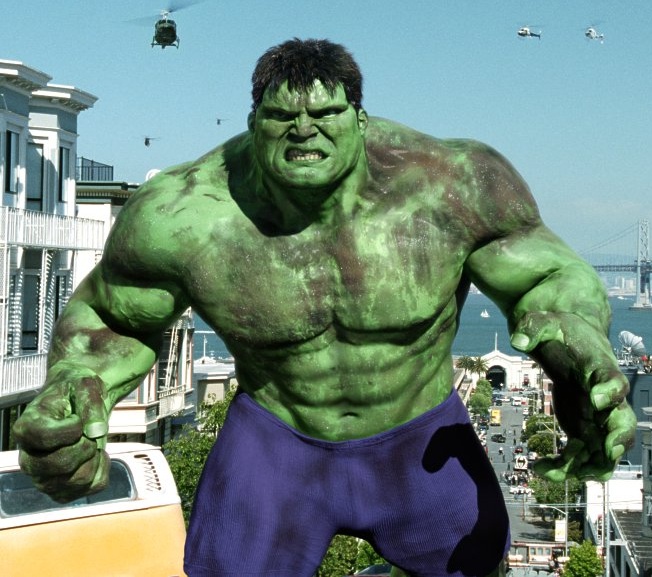
I love the look of the new Hulk in the upcoming Avengers film. The third* modern take on the character and I think we’re finally getting him to a decent place…
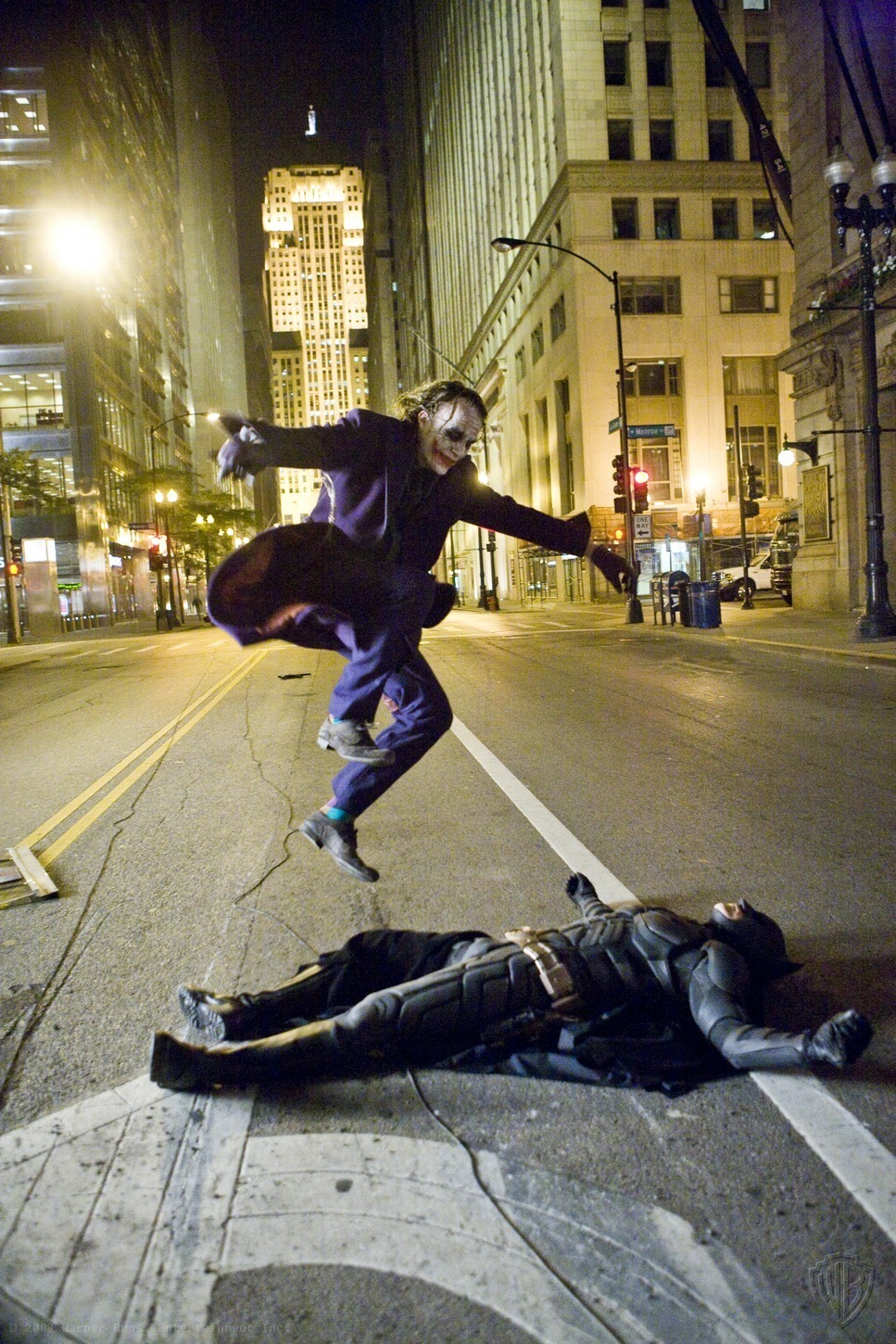
In Slovenia last week, one of my hosts, Aljosa Bagola (a cooler cat I never did meet), caught wind that I was a Batman fan and promptly pulled this image up on his iPhone.
Heath Ledger, as Joker, kick-flipping over Christian Bale on the set of The Dark Knight.
So. Freaking. Cool.
Enjoy it for a moment. Look at it over and over again. Then scroll down.
Seeing Christopher Reeve as Superman is probably the earliest film memory I can muster and, although the fourth installment in the series is by far and away the worst of Reeve’s tenure, I still get chills when I remember my Dad surprising me with a cinema trip when we were off out to visit one of his building sites:
“Dad! Dad! Look!”
“What is it son?”
“That cinema! Look! They’re showing Superman IV!”
“Are they? We best go and see it then.”
It was planned. He knew what he was doing. Site trips were nothing new and going around with Dad in his truck was always great. There just happened to be some building works next to the cinema where we were (already) headed and I thought they were his.
As I’m sure my 9yr old self would say: it was brill.
Between then and now, on the TV front at least, we’ve had the quite frankly terribleLois & Clark as well as the up and down (but mainly up) ten seasons of Smallville.
Set in a world where Superman III & IV never happened, Superman Returns is pitched as taking place five years after the events of Superman II. In the original Richard Donner cut of Superman II, scientists discover that Krypton might still exist. Upon learning this, Superman sets out to find his home; a process that takes – you guessed it – five years.
On his return, things have certainly changed. The world has moved on, Lois is with someone else and oh, there’s the small issue of her son as well.
It’s no secret that I am a comic book fan and, on top of that, a film lover also. More often than not, when discussing these two subjects in unison, the conversation eventually arrives at Superman Returns: without doubt, one of the most divisive films I’ve ever come across. People either love it or they hate it.
I love it*.
First up, we need to talk about the fantastic effort that director, Bryan Singer, put into tying this film back into the previous four two. From digging out old footage of Marlon Brando as Supes’ father, Jor-El, through to embracing that score – this truly is an extension of the Superman canon that I (and by all accounts, Mr Singer) grew up with. However, to build this out successfully, you need more than just a few nods to the subject matter’s celluloid history – you also need a decent cast.
Let’s turn to the star of the show himself – Superman. Brandon Routh is terrific as a modern day Kal-El and at times, especially when he’s in costume (as Clark Kent – thank you Bill), it’s like he’s channeling everything that Christopher Reeve first brought to the character and more. The strength, the weight – it’s all perfect. Swell, in fact.
Next, the city of Metropolis [yes, a city can be a character – and in this instance, a very important one at that]. This isn’t Gotham City, there’s no need for darkness here. There’s a timeless romanticism about Metropolis that Singer manages to capture while still maintaining the fresh feel of a latter day thriving and futuristic city of tomorrow. The Daily Planet may be a newspaper from the 40s, but stuck in the dark ages they ain’t.
Which leads me to Luthor, Lex Luthor.
Revisiting the Superman films of old, you realise that Gene Hackman’s interpretation is good but not brilliant. He captures Lex’s mania quite well, and his villainy too – but the darkness that drives the character forward seems to be missing (and perhaps there’s a little too much humour for my liking too). This is where Kevin Spacey’s take steps up – you can see the twisted anger behind the eyes, the obsession with land (another carry over from the first films) is once again apparent, but this time driven with an undying urge to kill Superman. There’s a part, in the final third of the film where he manages to inflict genuine physical pain upon our hero and… well, it’s just plain nasty. Good job.
Someone is missing… and this where things aren’t exactly perfect. I set out to write this post as the final word on my defence of Superman Returns but, whenever this discussion is played out in the pub, there is one big elephant in the room that, when we realise it’s there, threatens to destroy every and any argument that SR is any good: Kate Bosworth as Lois Lane.
She’s terrible.
I mean, literally, the worst thing in the entire film. You could argue that the fact that the character has been given A SON probably threw the fans off a little bit but, even if you took that away, she’s simply fundamentally miscast.
There are two arguments here –
Lois Lane is supposed to be a tough-talking, no-crap taking bullish news hound. This is not the case in SR and it just feels like there was no time dedicated to the development of this character at all.
If you’re going to very clearly base SR upon and around the original films, then why ignore all of the fantastic foundation work that Margot Kidder laid out for you? OK, so her version of Lois is pretty definitive, but at least try and capture of those smarts? Please? PLEASE? No.
Eugh.
But seriously (and back to the point), Kate Bosworth aside, Superman Returns is a bloody good Superman film.
Alright you could moan that there isn’t enough action, and yes you could bitch about a certain plot device that seems to go against everything else that’s been set up before, but what would be the point? Sometimes it’s nice just to sit back and enjoy the view – and Superman Returns gives us that by the bucket-load. Steeped in nostalgia and soaked in a soft-focus vision of what a world could be like if Superman was real – it deserves a second look, easily.
“Well, I hope this experience hasn’t put any of you off flying…
Statistically speaking, it’s still the safest way to travel.”
Man of Steel is just over a year away and very soon we’ll have a new Superman to marvel at (and pick over). But, for now at least, go and give Superman Returns another look. It really isn’t that bad at all.
And finally.. for the fans out there…
If you followed the film during its shoot, there were rumours of a hugely expensive ($10m!) exploratory ‘Search for Krypton’ opener that Warner Bros cut from the theatrical release. It was denied, however rumours of its existence have long persisted and only recently – and coinciding with the Blu-Ray anthology re-release of all the films as one collection – the footage finally come to light.
It’s gorgeous.
A totally unscripted six minute journey through the remnants of Krypton, this pre-credits sequence would’ve set the film up in a totally different way.
This post is about the recent home release social media activation of the film DRIVE. There maybe spoilers ahead BUT I’ll be sure to yell loudly if they come near. Then again, we may make it without any. We shall see…
Drive: a stunning, nay breathtaking, film from 2011 (some would argue THE film of 2011). Woefully ignored by the Academy but adored by fans worldwide, its a glorious tale of love-driven revenge told through the haze of 70’s LA neon with a soundtrack to match.
On Monday, Jan 30th 2012, Drive got its UK home release on both DVD and Blu-ray and, to celebrate said launch, film-studio-friendly agency, Think Jam, sent out early copies of the film out to a select group of fans on Twitter.
The aim? To kick-start a pre-scheduled participatory/group viewing, snappily referred to as #DriveTime.
Nice idea.
But not everyone agreed –
Dan has a point.
In fact, the whole conversation between him and Mike is worth a look (especially as both have proven experience in this kind of marketing). I stumbled across the conversation between the two of them after the film had finished, however found myself unknowingly agreeing with them midway through.
That aside, there’s also the very real issue of SPOILERS.
I would be gutted if someone I followed [on Twitter] unwittingly gave away key plot points throughout any film that I was yet to see (especially on THE DAY of its home release, ie; if you didn’t see it at the cinema then you’re stuffed). In fact, so much did it concern me that I issued my own warning before the film started.
Those issues aside, the ‘event’ seemed to go well. So well in fact, that my friend and I started kicking around some ideas around data visualisation that could work alongside it – yes, that’s right, we’re data geeks.
Bear with me, this is where things get interesting –
But these events, they’re huge, global happenings with hundreds of thousands of tweets to process, giving you an extremely granular level of preciseness that you wouldn’t find with say, 1200 or so tweets… right?
Well, ish.
“…I bet they haven’t sold it in.”
One of the great things about these kinds of social media campaigns is that the data is (relatively) free and available for anyone to access. So what if you could steal the data from the Drive activity and not only present it back in a gorgeous fashion, but also demonstrate your skill as a potential new partner in doing so?
“Could you piggy-back another agency’s paid activity to showcase your own?”
Well, as I said, the data is there. So all you would need to do is farm that information and go from there… right?
I’ve cleaned it up somewhat (only showing the data between 7pm and 10pm – the film started at 8pm) but you can clearly see the flurry of activity that happened throughout.
Now, we can sexify this chart (thanks Robbie) and we can also actually map the highlights of the film against the peaks and troughs of conversation.
A – 8pm: the film starts
B – End of [the awesome] opening sequence, ‘Night Call‘ kicks in
C – The Driver meets the girl for the first time – it’s encapsulating
D – Combination of ‘Under your Spell‘ starting + a key killer quote from our hero
E – Sequence of Driver and Irene spending time together [intense]
F – That elevator scene
G – Dip for a(nother) particularly violent piece
H – Film ends, people loved it and tweet according
. Incredible.
What are the takeaways from this exercise?
If you’re planning a scheduled viewing (over social media) make it both a) a universally accepted film (read: a classic that most people have seen) and b) perhaps one that’s not so visually sumptuous and arresting. .
Think about THE DATA. Alright there was a Storify after the fact, but if me and my friends can throw together a crude visualisation of what our collective tweets look like… then Christ, what else is possible?
Which in turn asks a bigger question:
If today’s brands (and consumers) are ready to remix anything and everything, what’s to stop the agencies of tomorrow doing the same?




 whatleydude.com